Egypt, Sudan and Eritrea Say Coastal States Should Govern Red Sea Security, as Eritrea’s Foreign Minister Calls Ethiopia’s Sea Claims an “Unprovoked Declaration of War”
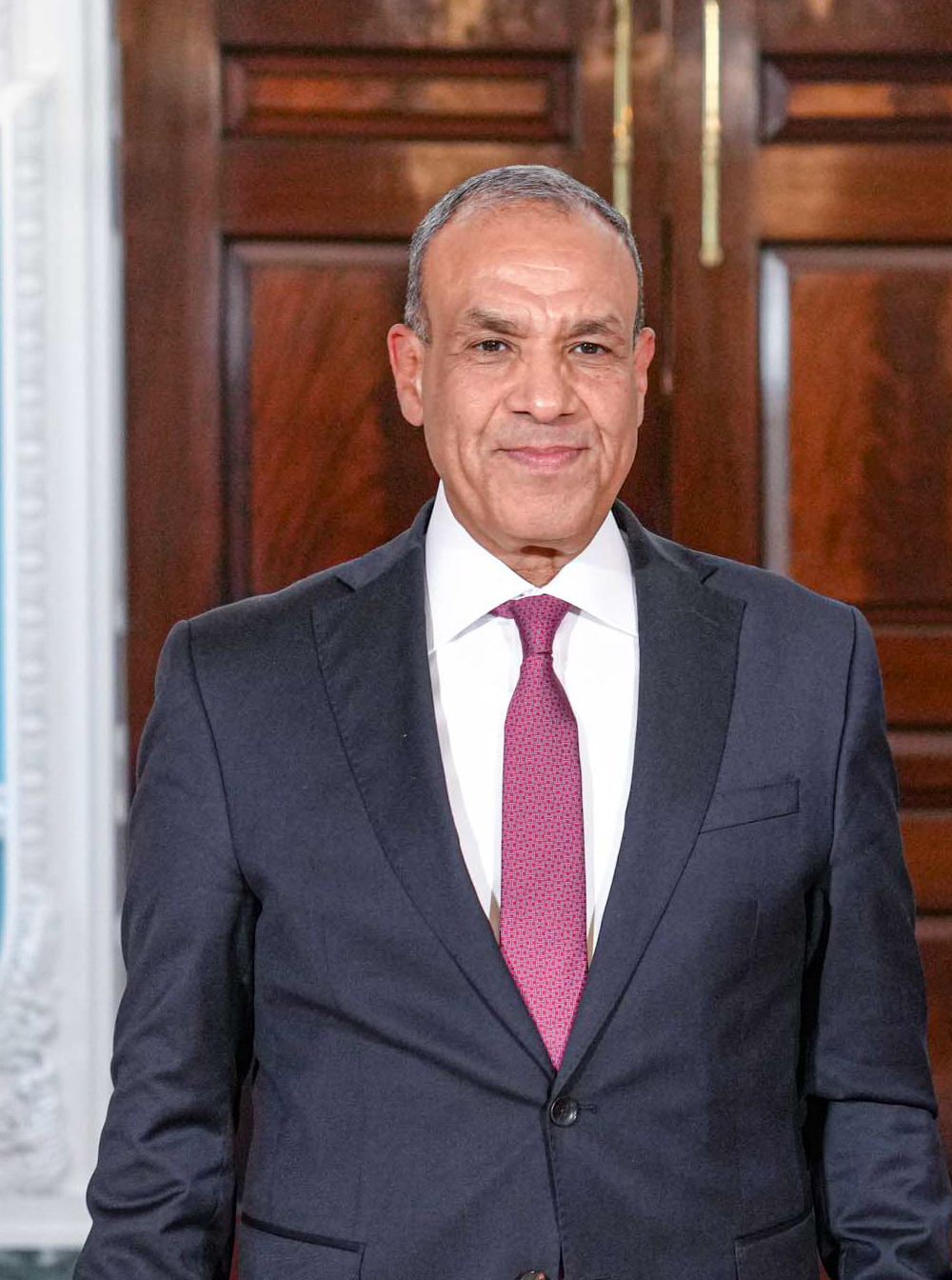
Egypt’s foreign minister, Badr Abdelatty, in Washington, D.C., on July 30, 2025. File photo. Photo: Freddie Everett/U.S. Department of State, public domain
The foreign ministers of Egypt, Sudan and Eritrea agreed on Saturday that governing the Red Sea and protecting its security is the job of the countries on its shores, Egypt’s Foreign Ministry said.
They also rejected “unilateral actions, whether in the security sphere or regarding issues of water security,” according to the ministry’s account carried by Egypt Today. The statement named no country, as Daily News Egypt pointed out. Daily News Egypt’s report placed both lines against Ethiopia’s two disputes with its neighbors, over access to the sea and over its dam on the Blue Nile.
Egypt’s Badr Abdelatty met Sudan’s Mohieddin Salem and Eritrea’s Osman Saleh in Aswan, in southern Egypt, on the sidelines of the sixth Aswan Forum for Sustainable Peace and Development. The ministry’s spokesman, Nader Zaki, said the three agreed to build on the summit their leaders held with Somalia in El Alamein in October. Abdelatty said he would brief the Somali side on the talks.
The ministers backed Sudan’s sovereignty and its “national institutions,” and rejected “the role of armed militias and their external arming.” They supported Somalia’s unity and rejected “the establishment of any parallel entities,” in line with the El Alamein declaration’s stand against any recognition of Somaliland. They also “affirmed their support for the unity, sovereignty, and territorial integrity of Eritrea.”
Somalia, which took part in the October summit, was not mentioned as a participant this time, Addis Standard noted on X. BBC Tigrinya, which reported the meeting on Sunday, said no reason had been given for Somalia’s absence.
Osman went much further in his own speech to the forum, which Eritrea’s Information Ministry published on Sunday. Since 2023, he said, “the Ethiopian leadership has pursued an increasingly belligerent rhetoric,” portraying Eritrea’s independence as a “historical mistake” that must be put right.
He accused Ethiopia of “openly advancing unlawful claims and ambitions” over the port of Assab and the whole of Eritrea’s southern coastline. “Eritrea regards this perilous campaign as an unprovoked declaration of war,” he told the forum.
Osman also pointed to a letter the Ethiopian Government sent the UN Security Council on Oct. 9. He said Addis Ababa had “notified” the council of “its intentions to launch a war of aggression against Eritrea, under the spurious invocation of self-defense.” In that letter, Ethiopian Foreign Minister Gedion Timothewos accused Eritrea of sending troops into Ethiopia and arming insurgents, and he invoked Article 51 of the UN Charter, as Zegabi reported.
“We harbor no ambitions for confrontation with any neighbor,” Osman said. He said the Red Sea’s security must be “primarily the responsibility of the littoral states themselves.” It must also be guarded against “destabilizing external militarization, proxy rivalries, and unlawful territorial encroachments,” he said.
Eritrea’s information minister, Yemane Gebremeskel, shared the speech on X and wrote that the three ministers “reaffirmed their commitment to the principles agreed at the October El Alamein Summit.” On Sunday the ministry’s account also posted a Tigrinya commentary by Abraha T. Chealo accusing Abiy Ahmed of interfering in Eritrea’s internal affairs.
At a roundtable on the Red Sea and the Horn of Africa on Saturday, Abdelatty warned that militarization and a growing foreign military presence were threatening shipping and trade, Egypt Today reported. The UN’s Horn of Africa envoy, Guang Cong, and the EU’s Horn envoy, Annette Weber, were among those at the table.
All three countries now have tense relations with Ethiopia, BBC Tigrinya noted. It said senior Ethiopian officials led by Abiy Ahmed had made repeated speeches on owning a sea outlet since the 2022 Pretoria agreement, and that relations with Eritrea soured as a result.
Abiy Ahmed’s regime accuses Eritrea of arming and supplying the TPLF and other armed groups fighting federal troops, and it accuses Egypt of backing them as well. Both countries call the charge “lies and defamation,” BBC Afaan Oromoo reported in Zegabi’s translation, and Eritrea has told the UN that Ethiopia is using it as a pretext to invade.
Sudan has its own complaint. BBC Tigrinya recalled a Reuters investigation from February that said Ethiopia was hosting a secret camp in Benishangul-Gumuz to train thousands of Rapid Support Forces fighters. Eight sources, including a senior Ethiopian official, told Reuters that the United Arab Emirates financed the camp’s construction, which the UAE denied. Ethiopia did not respond to Reuters at the time and later denied the report, as Zegabi reported. Sudan’s army also says RSF drones that struck civilians and power stations in eastern Sudan were launched from inside Ethiopia. The authorities in Addis Ababa, in turn, accuse Sudan’s army of arming groups that fight them, as Zegabi reported.
When the four leaders met in El Alamein, Ethiopia’s Foreign Ministry answered a day later. It said the country’s claims on the Blue Nile and the Red Sea “cannot be altered by political rhetoric, coercive measures, or acts of destabilisation,” as Zegabi reported. By Sunday morning, Zegabi had found no published reaction from the federal government in Addis Ababa to the Aswan statement or to Osman’s speech.
One X account, Yonas Ethio (@yonast98), which has about 25,600 followers and is not identified by a real name, wrote that the talks took place in Aswan, home of Egypt’s High Dam. He recalled the 1959 deal in which Egypt and Sudan divided the Nile’s water without Ethiopia. “On the river, they want a vote over Ethiopia’s water. On the sea, they want a closed door,” he wrote.
The ministers met as Ethiopian and Eritrean troops face each other around Badme, on the border with Tigray. The conflict monitor ACLED said an army drone strike on Badme town on Nov. 19 forced an unknown number of residents to flee. Families from villages near the border are walking to Sheraro and Shire, a resident told DW Amharic. Many of them had been displaced in the war that began in 2020 and are now on the move again, the resident said.
Sources
- Egypt Today, Nov. 21, 2026: FMs of Egypt, Sudan, and Eritrea hold trilateral meeting in Aswan
- Egypt Today, Nov. 22, 2026: Egypt warns Red Sea militarization heightens tensions, threatens maritime trade at Aswan Forum
- Daily News Egypt (DNE Africa), Nov. 21, 2026: Egypt, Sudan and Eritrea say Red Sea security is for coastal states
- Eritrea Ministry of Information, Nov. 22, 2026: Statement by Foreign Minister Osman Saleh at the Sixth Edition of the Aswan Forum
- Yemane Gebremeskel on X, Nov. 22, 2026
- Eritrea Ministry of Information on X, Nov. 22, 2026: Tigrinya commentary on Abiy Ahmed (Tigrinya)
- BBC Tigrinya, Nov. 22, 2026: Egypt, Sudan and Eritrea discuss Red Sea security and Horn of Africa stability (Tigrinya)
- BBC Afaan Oromoo, Nov. 22, 2026: What did Egypt, Eritrea and Sudan discuss on the Red Sea and the Horn of Africa? (Afaan Oromoo)
- Reuters, Feb. 10, 2026: Ethiopia builds secret camp to train Sudan RSF fighters, sources say
- Addis Standard on X, Nov. 21, 2026
- Yonas Ethio on X, Nov. 22, 2026
- ACLED, Conflict in Ethiopia (alerts, Nov. 19 and 20, 2026)
- DW Amharic, Nov. 21, 2026: residents near the Eritrean border in Tigray are leaving for fear of war (Amharic)
- Zegabi’s earlier reporting: 179490, 179574, 180865, 181345, 181491