Security Council Set to Meet Behind Closed Doors on Ethiopia and Eritrea at US Request as Both Governments Accuse Each Other of Aggression
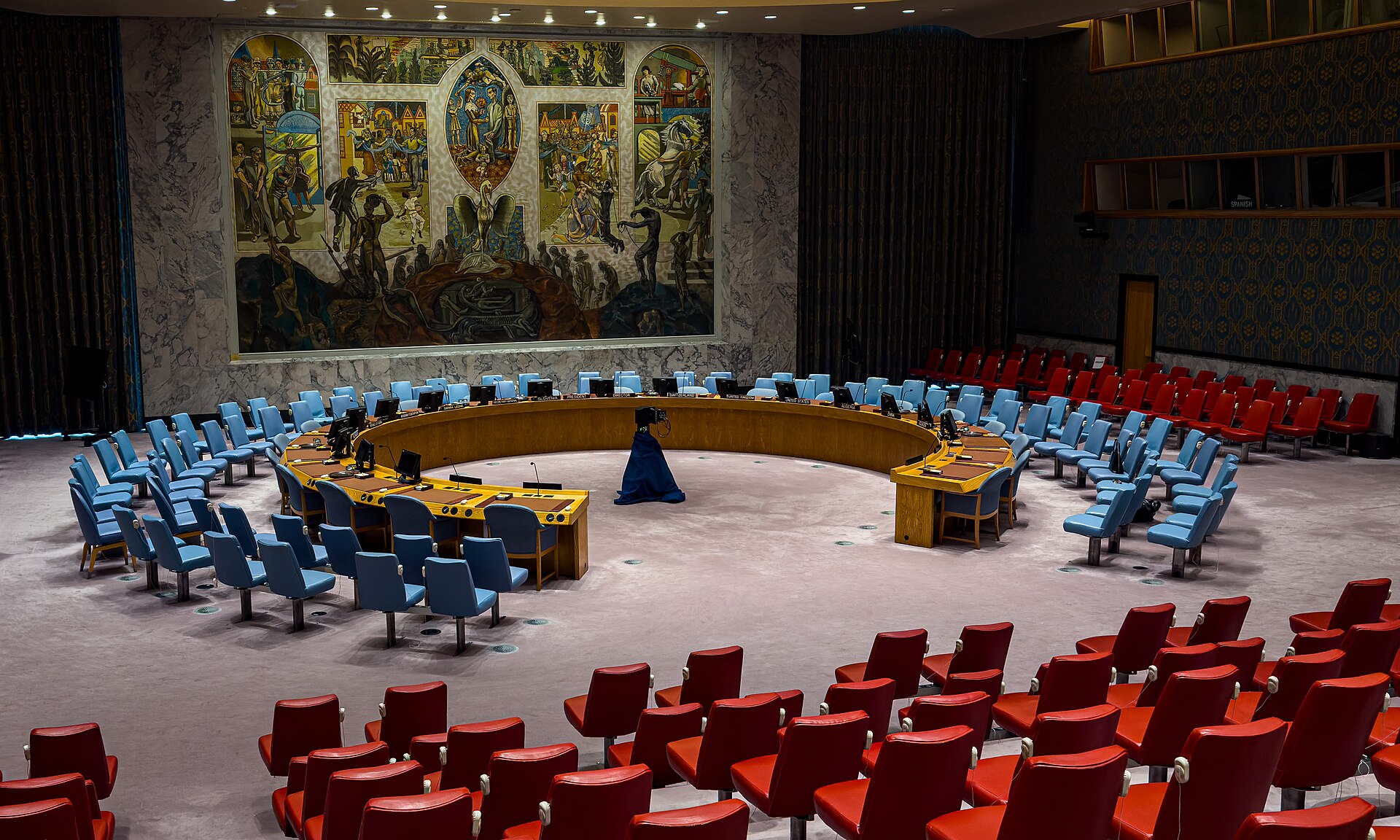
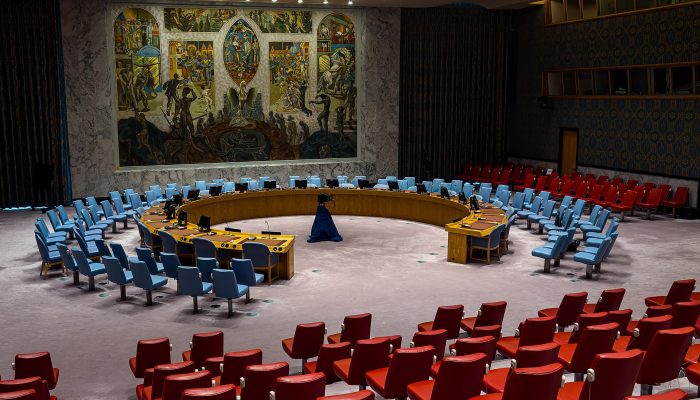
The UN Security Council chamber in New York, seen empty in September 2024. Council members were scheduled to meet on Oct. 13, 2026, in closed consultations on the Horn of Africa, which take place away from the public chamber. [file photo: Jdforrester / Wikimedia Commons, CC BY 4.0]
The UN Security Council was set to meet behind closed doors in New York on Tuesday morning to discuss the fighting in northern Ethiopia and the growing confrontation between Ethiopia and Eritrea, a session the United States requested after the two governments sent the Council rival letters last week, each accusing the other of aggression, Security Council Report said.
Martin Kimani, the UN Assistant Secretary-General for Africa in the Departments of Political and Peacebuilding Affairs and Peace Operations, was expected to brief members. It is the second time in about two weeks that the Council has taken up the crisis. Members held similar closed consultations on Sept. 30 at France’s request, and Kimani briefed them then as well. Tuesday’s session was scheduled to follow an open briefing on the Great Lakes region, Security Council Report wrote on X. Because the talks are closed, no public record of what members say is expected, and Kulu Media reported that no formal statement or resolution had been announced.
The two letters at the center of the meeting were written a day apart. In the first, dated Oct. 9, Ethiopian Foreign Minister Gedion Timothewos accused Eritrea of sending mechanised and infantry units into Ethiopian territory and of “harbouring, supporting, financing, arming and directing armed insurgent groups operating within Ethiopia,” according to the International Crisis Group, and he invoked Ethiopia’s right of self-defence under Article 51 of the UN Charter. AFP, in a report carried by Al Jazeera, said the letter described an “all-out invasion” and stated that Eritrean troops had advanced up to 60 kilometres into Tigray. The letter did not say what measures Ethiopia was taking. The Associated Press, which obtained a copy, reported that it did not identify the areas it said were occupied or provide evidence for its allegations, and that the AP could not independently verify them.
Eritrea answered the next day. In a letter dated Oct. 10, Foreign Minister Osman Saleh called the Ethiopian claims “deceitful attempts to rationalise its brazen acts of war” that were “hollow in substance,” and accused the federal government in Addis Ababa of seeking “sovereign access to the sea” by force, according to Al Jazeera and Security Council Report. He cited a Sept. 27 remark by Ethiopia’s Deputy Chief of Staff, General Abebaw Tadesse, that Mekelle was a “stop-over” on the way to invading Eritrea. “Eritrea requests the UN Security Council to forcefully condemn Ethiopia’s deplorable declaration of war against Eritrea … and take the requisite deterrent measures,” Osman wrote, asking the Council to act under Chapter VII of the Charter, which allows measures ranging from sanctions to the use of force. AFP and the AP have noted that Asmara has not directly confirmed or denied the reported troop crossings.
The neighbors have had no diplomatic relations since Oct. 1, when Eritrea cut ties after the Ethiopian Government expelled ten Eritrean diplomats and closed its embassy in Asmara. Three days later, the leaders of Egypt, Eritrea, Sudan and Somalia adopted the El Alamein Joint Declaration, which said the governance of the Red Sea belongs to the states on its shores. On Oct. 5, as he was sworn in for another five-year term, Prime Minister Abiy Ahmed repeated that landlocked Ethiopia must have access to the Red Sea and a place in talks on its security. Somalia has since tried to step back from the quarrel. Its deputy foreign minister, Hassan Mohamed Ali, told BBC Somali on Sunday that his government’s position is “peaceful and neutral,” BBC Amharic reported.
The fighting that brought the dispute to New York began on Sept. 23, when the TPLF and six other armed groups in what they call the Alliance for Survival launched offensives against federal forces. Abiy Ahmed’s regime has since regained most of Tigray, according to Crisis Group. Federal troops and the allied Tigray Peace Force entered Mekelle on Oct. 3 after the TPLF withdrew, and later reported taking Adigrat, Shire and other towns. Residents told AFP that government forces entered Adwa, about 40 kilometres from the Eritrean border, on Sunday without a fight, and RFI Afrique reported that they entered Axum on Monday. The Belgium-based Europe External Programme with Africa said on Monday that the Bure, Denakil, Garbo and Awala areas of Afar had become active combat zones between Ethiopian and Eritrean forces, a claim that has not been independently verified.
Security Council Report said Kimani might repeat points from an Oct. 9 statement by Secretary-General António Guterres, who said he was gravely concerned by the renewed fighting in Tigray, Afar and Amhara, called for an immediate cessation of hostilities and a return to dialogue under the 2022 Pretoria Agreement, expressed concern at reports of Eritrean forces in Ethiopia and offered his good offices. Kimani might also refer to the Algiers Agreement that ended the 1998 to 2000 war between the two countries. Members were likely to call on all sides to de-escalate, the think tank said, and several may ask for more information about the reports of Eritrean troops inside Ethiopia and about what Ethiopia’s self-defence measures involve. Members may also differ over how far the Council should go. Some may prefer to leave the matter to the African Union and the Pretoria framework, while others may push for a press statement. During the 2020 to 2022 war, divisions among members limited the Council to two press statements, in April and November 2021.
Council members have already staked out positions in public. Britain rejected the alliance’s stated aim of overthrowing Ethiopia’s government, and France and other European members condemned the alliance’s attacks, Security Council Report said. The U.S. State Department has said the conflict puts American cooperation with both Ethiopia and Eritrea at risk, and on Oct. 5 Massad Boulos, the U.S. senior adviser for Arab and African affairs, urged the two countries to respect each other’s sovereignty and territorial integrity and to exercise maximum restraint. Russia called for a ceasefire and told outside actors not to interfere in Ethiopia’s internal affairs.
In a briefing published Monday, the International Crisis Group said Ethiopia and Eritrea “stand perilously close to all-out war as heavy fighting inches close to their shared border.” It urged foreign capitals to press Abiy Ahmed not to advance into Eritrean territory and to ask Asmara to withdraw any troops still on Ethiopian soil, and it said the Council should make “a clear call for both sides to respect the UN Charter” and ask the Secretary-General to start urgent diplomacy. The group wrote that Ethiopian officials maintain they have no intention of fighting a war on Eritrean soil.
Before the meeting, Kjetil Tronvoll (@KjetilTronvoll), a professor and vice rector for research at Oslo New University College, wrote on X: “Do not expect any constructive outcome; it is expected that UN rep. will call for implementation of Pretoria, as if that still is an option…” Comfort Ero (@EroComfort), president and chief executive of Crisis Group, reminded followers that Ethiopia had told the Council it was “taking measures” of self-defence and that Eritrea had answered by accusing it of declaring a “war of aggression.” Eritrea’s information minister, Yemane G. Meskel (@hawelti), posted a line from Abiy Ahmed’s Oct. 28, 2025 speech to parliament, “We did not start building our Navy five years ago (in 2020) to make it float in a small pool of water,” and called it a “smoking gun” showing that “the war agenda was long planned.” Eritrea’s Ministry of Information (@shabait) posted a Tigrigna editorial under the headline “ኲናት ዝእውጁ – ኲናት ዘይፈልጡ እዮም” (“Those who declare war are those who do not know war”), saying Ethiopia’s letter to the Council made official a war declared three years ago and that “ምስ ኤርትራ ኲናት፡ ንብልጽግና ርእሰ-ቅትለት እዩ” (“war with Eritrea is suicide for [the] Prosperity [Party]”). An account posting as ኤረይ-ዓዲጀጋኑ (@Aman221278), whose bio is empty, wrote in Tigrigna that “ብተምሳል ነብሰ ምክላኻል: ኣንጻር ኤርትራ ወራር ንምግበር ኩኹነን ዘለዎ’ዩ” (“under the pretext of self-defense, it is preparing an invasion against Eritrea”). Zebiba (@zebibaberhane) wrote in Arabic, tagging Bahrain’s mission to the UN, “على مجلس الأمن إدانة إثيوبيا في إجتماعه يوم الثلاثاء حول القرن الإفريقي” (“The Security Council must condemn Ethiopia at its Tuesday meeting on the Horn of Africa”). An account called Horn Perspectives (@horn_outlook), whose bio is empty, argued that “even if Ethiopia’s allegations are proven, self-defence is not a licence for territorial conquest.” From the other side, Dagnachew (@Harmuema), whose bio says he promotes equality and human rights, noted that both countries had written to the UN “accusing each other of aggression” and added, “🇪🇷 forces are on z run.” Zegabi has not verified the claims made in these posts.
The Security Council and the African Union Peace and Security Council hold their annual joint consultative meeting on Oct. 23. Kimani recommended during the Sept. 30 consultations that the crisis be discussed there, but Security Council Report said it does not appear that the issue will be on the agenda.
Sources
- Security Council Report, “Horn of Africa: Closed Consultations,” What’s In Blue, Oct. 12, 2026
- Security Council Report (@SCRtweets) on X, Oct. 12, 2026
- Kulu Media, “UN Security Council to Discuss Ethiopia–Eritrea Tensions at US Request,” Oct. 13, 2026
- Al Jazeera / AFP / AP, “Eritrea urges UN to intervene in standoff with Ethiopia,” Oct. 10, 2026
- Associated Press via ABC News, “Ethiopia tells UN it is acting in self-defense against Eritrea,” Oct. 10, 2026
- Africanews / AFP, “Life returns to Mekelle after Ethiopian forces retake Tigray capital,” Oct. 13, 2026
- Al Jazeera / AFP, “Ethiopian forces enter strategic Tigray town of Adwa, witnesses say,” Oct. 12, 2026
- RFI Afrique on X, Oct. 13, 2026
- International Crisis Group, “Pulling Ethiopia and Eritrea Back from War,” Oct. 12, 2026
- EEPA Situation Report, Oct. 12, 2026
- BBC Amharic, Somalia neutrality report, Oct. 12, 2026
- Kjetil Tronvoll (@KjetilTronvoll) on X
- Comfort Ero (@EroComfort) on X
- Yemane G. Meskel (@hawelti) on X
- Ministry of Information, Eritrea (@shabait) on X
- @Aman221278 on X
- Zebiba (@zebibaberhane) on X
- Horn Perspectives (@horn_outlook) on X
- Dagnachew (@Harmuema) on X