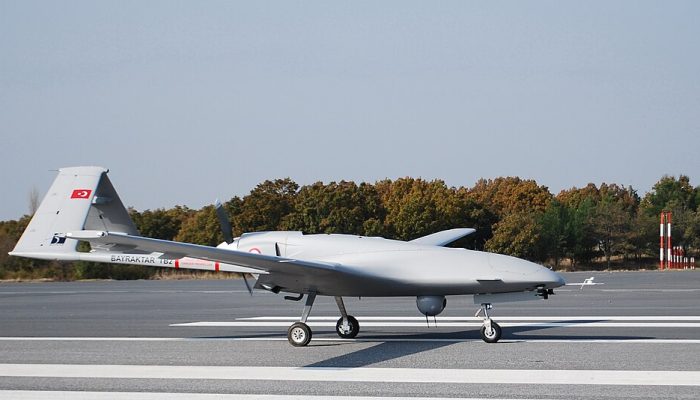
Abiy Ahmed’s regime in Ethiopia Showcases Homegrown Drones as Amhara region is hit by a Hundred-Plus Strikes
Since the Fano war began in April 2023, Amhara communities have lived under an air campaign few villages can answer. Conflict trackers at ACLED count 102 federal drone strikes in Amhara over that period — a running total, not a single week’s barrage — while diaspora and rights monitors have recorded schools, churches, and residential kebeles among the places hit.
That toll is the backdrop to Addis Ababa’s latest showcase. On September 8, as Ethiopia marked Pagume’s “Day of Resilience,” Prime Minister Abiy Ahmed cast domestic arms production, including unmanned aerial vehicles, as the foundation of national peace and prosperity. State media quoted him praising factories that now turn out UAVs, armored vehicles, heavy weapons, and ammunition “driven by its own knowledge and the capability of its children.”
An AFP investigation published the same day via France 24 reported that Ethiopia has run two drone plants since 2025 — SkyWin in Addis Ababa and Aeroabay — and is assessed by analysts to field thousands of systems, from imported Turkish, Chinese, and Iranian models to cheap fibre-optic FPV attack drones. International Crisis Group notes that drones have repeatedly been linked to civilian deaths. The same reporting points to a sharper recent tempo in Tigray — at least 14 strikes there in 2026, seven in August alone — as Pretoria-deal tensions relapse. Amhara’s air war has not vanished; AAA’s July–August documentation still lists strikes into mid-August, including Raya-Alamata and South Wollo. But cloudy kiremt weather often slows larger UAV operations, and the freshest wire-confirmed bursts right now are concentrated further north.
For Amhara readers, the political meaning does not depend on yesterday’s sortie count. Addis markets “deterrence” and self-reliance while rural Amhara has already absorbed more than a hundred recorded strikes, with Fano chairman Zemene Kassie accusing the government of indiscriminate attacks on civilians and religious sites — claims that remain contested, even as ACLED’s aggregate is harder for the palace to dismiss as rumor. A 41-nation statement at the UN Human Rights Council on September 9 named Amhara and Oromia among regions where civilians and aid workers need unconditional protection. Whether that language changes drone policy is another matter: as Crisis Group’s Magnus Taylor observed, unopposed drones let Abiy fight a war of attrition without the political cost of a large ground campaign. Amhara’s civilians have already paid that cost.
Sources: France 24 / AFP, Sept 8, 2026; ENA, Sept 8, 2026; AAA, Sept 1, 2026; Capital Ethiopia, Sept 9, 2026; allAfrica / Addis Standard, Aug 18, 2026; CFR, updated Aug 3, 2026.