Ethiopia’s Army Chief Claims the Army Has Defeated the Rebel Alliance That Includes Fano
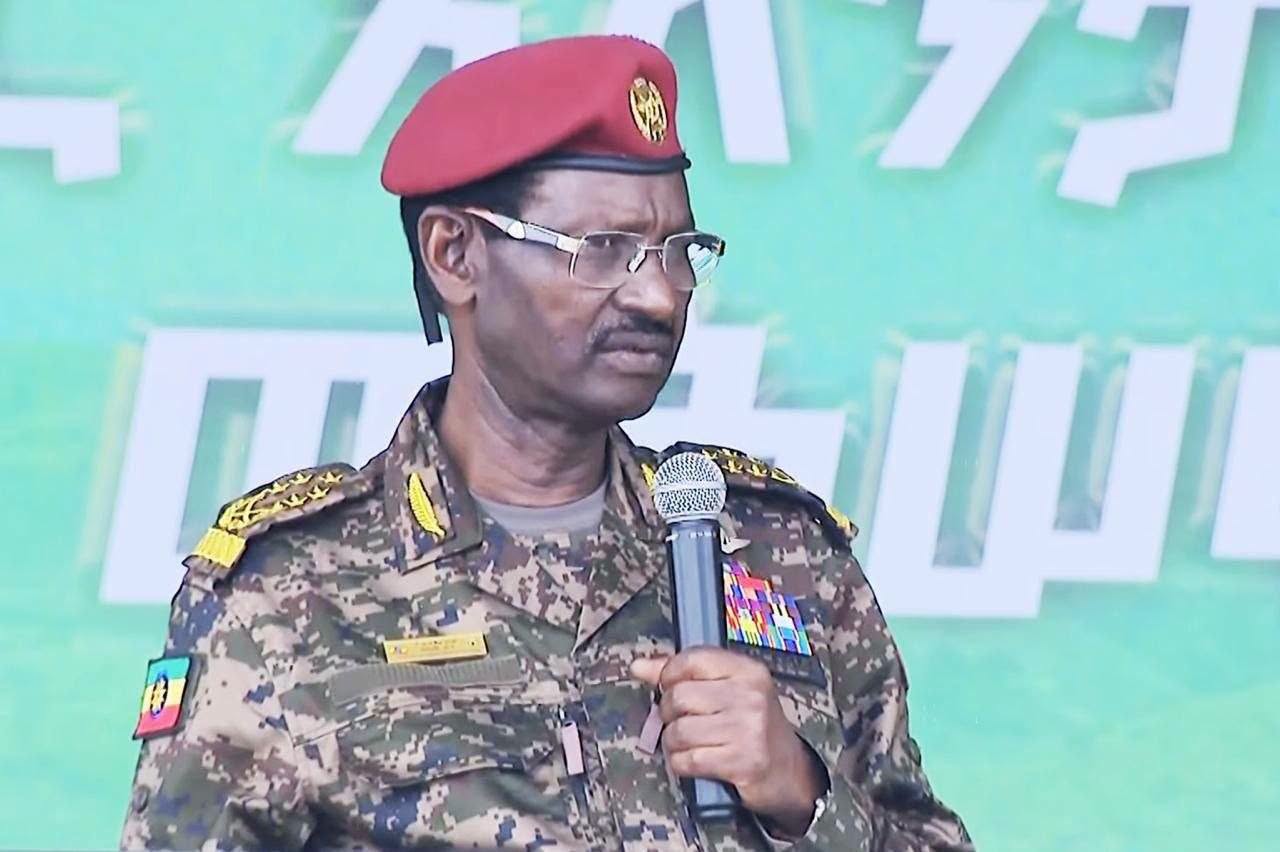
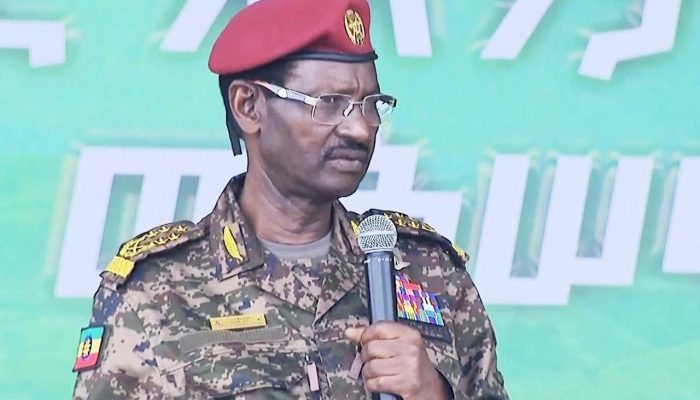
Field Marshal Birhanu Jula speaks on Sunday at the 119th Defense Forces Day ceremony at the Armed Forces General Headquarters in Addis Ababa. [Fana via X]
Ethiopia’s army chief, Field Marshal Birhanu Jula, claimed on Sunday that the army had defeated the seven-group rebel alliance that includes the Amhara Fano National Movement, and warned that causes framed as the survival of the Amhara, the Oromo and Tigray were hiding a threat to the country.
Birhanu, the chief of staff of the Ethiopian National Defense Force, spoke for about 12 minutes at the Armed Forces General Headquarters in Addis Ababa, where the Ethiopian Gov’t marked the 119th Defense Forces Day under the theme “Army of Victory,” with Defense Minister Mohammed Idris, foreign military attachés and diplomats in the audience, according to ENA and Ethiopia Insider. The day marks Tikimt 15 in the Ethiopian calendar, when Emperor Menelik set up a war ministry and named Fitawrari Habte Giorgis Dinegde its first minister.
He said the war was started by what he called a “Tsimdo” coordinated “from Egypt to Khartoum and Asmara,” which, in his words, sent the TPLF to open fighting on the North Wollo, Wag and Afar fronts on Sept. 23, and that the TPLF “has become as if it never existed in the war it opened itself,” DW Amharic reported. “They judged that the defense army had grown weak and would collapse if they pushed it a little, and when they provoked it they tasted the collapse they had wished on the army, used up Tigray’s resources and went into Mendefera,” he said, according to Sputnik Ethiopia. He claimed that within ten days the TPLF’s fighters had been driven into Mendefera in Eritrea. He also said soldiers had seized weapons shipped through Eritrea’s Massawa port that could arm “a modest-sized country.” He said the army had defeated “seven Tsimdo groups” and “three foreign forces” behind them, and he told the groups to give up. “There is no transitional government you will set up on the grave of the defense army. Surrender for peace,” he said, in Sputnik’s account. Tsimdo, an Amharic word for an alliance, is what officials in Addis Ababa call the rebel coalition known as the Alliance for Survival, which brings together the TPLF and the Amhara Fano National Movement and has since been joined by the Oromo Liberation Army and the Gumuz People’s Democratic Movement, according to the Critical Threats Project.
Birhanu did not name the enemy he described as the force behind the war, but he said it was “an enemy that has fought us and made us fight since the 15th century,” and that it “is attacking us while hiding inside the survival of the Amhara, the Oromo and Tigray,” Ethiopia Insider reported. He told the gathering that the Abay is “Ethiopia’s natural gift” and that the Red Sea “is a sea the Creator made for us Ethiopians to use,” and he said the government and the army had “no option other than” protecting those interests. According to Fana, he also said that those who want power should organize and compete peacefully rather than try to break up the army and impose a transitional government through armed struggle, and that the people of Tigray needed peace, new ideas and new leadership after years of war.
None of the army chief’s battlefield claims could be checked independently. The army chief did not say on Sunday where or when the arms were taken. Lt. Gen. Fisseha Kidanu, who was introduced as the commander of the Tigray army, said on Thursday that the region was still at war and called on local militias and volunteers to fight, Al Jazeera reported, and he had said earlier, in DW Amharic’s report, “We know it has superiority in drones, manpower and mechanized forces; this is not something solved by fighting them head-on.”
In Amhara, where the fronts Birhanu named are, fighting between the federal army and Fano forces has not stopped. The Critical Threats Project said in its Oct. 23 review that clashes between the army and the Amhara Fano National Movement halted traffic on Oct. 22 on the main road from Woldia to Bahir Dar, and that TPLF and Fano forces reportedly took Abergele, near the border between Tigray and Amhara, by Oct. 23. The UN humanitarian office said on Friday that drone strikes in eastern Amhara killed at least 15 civilians between Oct. 15 and Oct. 21, according to OCHA.
Getachew Reda, Prime Minister Abiy Ahmed’s adviser on East African affairs, told a forum in Addis Ababa last week that when the fighting began, the Eritrean government had given the TPLF and Fano an “order” to push deep into the Amhara and Afar regions and cut the road to Djibouti, according to Ethiopia Insider. Eritrea’s foreign ministry said in an Oct. 21 statement that Eritrean forces are inside the country’s own borders. Eritrea’s Ministry of Information, the TPLF and the Amhara Fano National Movement had not commented on the speech by Sunday morning.
On X, Natnael Mekonnen (@NatnaelMekonne7) shared a clip and wrote in Amharic, “Retreating doesn’t mean turning up in Mendefera within 10 days,” adding that the field marshal, “with his usual wit, killed us with laughter today.” Amhara Army (@FanoMedia27) answered the speech in Amharic with, “And what did we say? The army is the guardian of the OPDO’s seat!” Abrar Suleiman (@AbrarSuleiman) posted a video he said was from Agbe, Tigray, and wrote, “The defense army is celebrating its 119th founding anniversary! Note that a month ago there was not a single Ethiopian soldier here.”
Sources
- DW Amharic, “በሰሜን ወሎ ማጥቃት የጀመረው የህወሓት ቡድን በአሥር ቀናት ውስጥ በሚገባው ልክ ተመትቶ ኤርትራ መንደፈራ ገብቷል,” Oct. 25, 2026
- Ethiopia Insider, “የአንድ መጠነኛ ሀገር የመከላከያ ትጥቅ ሊሆን የሚችል የጦር መሳሪያ ሰራዊታችን ተቆጣጥሯል: ፊልድ ማርሻል ብርሃኑ ጁላ,” Oct. 25, 2026
- ENA, “Ethiopia Marks 119th Defense Forces Day Under Theme: ‘Army of Victory’,” Oct. 25, 2026
- Fana, “ENDF Chief of Staff Vows to Defend Ethiopia’s Sovereignty, Says No Force Can Break Its Defense Army,” Oct. 25, 2026
- Fana, “TPLF and Its External Backers Hide Behind Ethnic Survival Narratives…,” Oct. 25, 2026
- Sputnik Ethiopia (@sputnik_ethio) on X, Oct. 25, 2026
- Sputnik Ethiopia (@sputnik_ethio) on X, Oct. 25, 2026
- Critical Threats, “Ethiopia War Security Review, October 20, 2026”
- Critical Threats, “Ethiopia War Security Review, October 23, 2026”
- Al Jazeera, “Tigray rebels urged to disarm as commander vows to fight Ethiopia’s gov’t,” Oct. 23, 2026
- OCHA via APO Group, “Ethiopia: Food assistance reaches tens of thousands affected by conflict, El Niño in northern areas,” Oct. 24, 2026
- Zegabi, “Eritrea Calls Getachew Reda a Liar…,” Oct. 24, 2026
- Natnael Mekonnen (@NatnaelMekonne7) on X, Oct. 25, 2026
- Amhara Army (@FanoMedia27) on X, Oct. 25, 2026
- Abrar Suleiman (@AbrarSuleiman) on X, Oct. 25, 2026