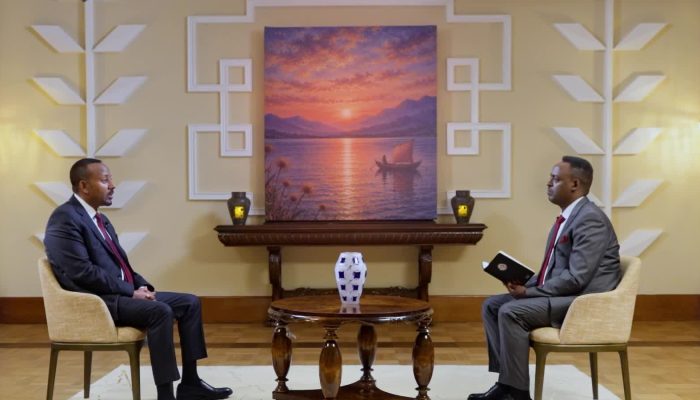
Abiy Ahmed Warns Eritrea of “Very, Very, Very Severe Consequences” in Tigrigna Interview and Tells Tigray’s Armed Youth to Lay Down Their Guns
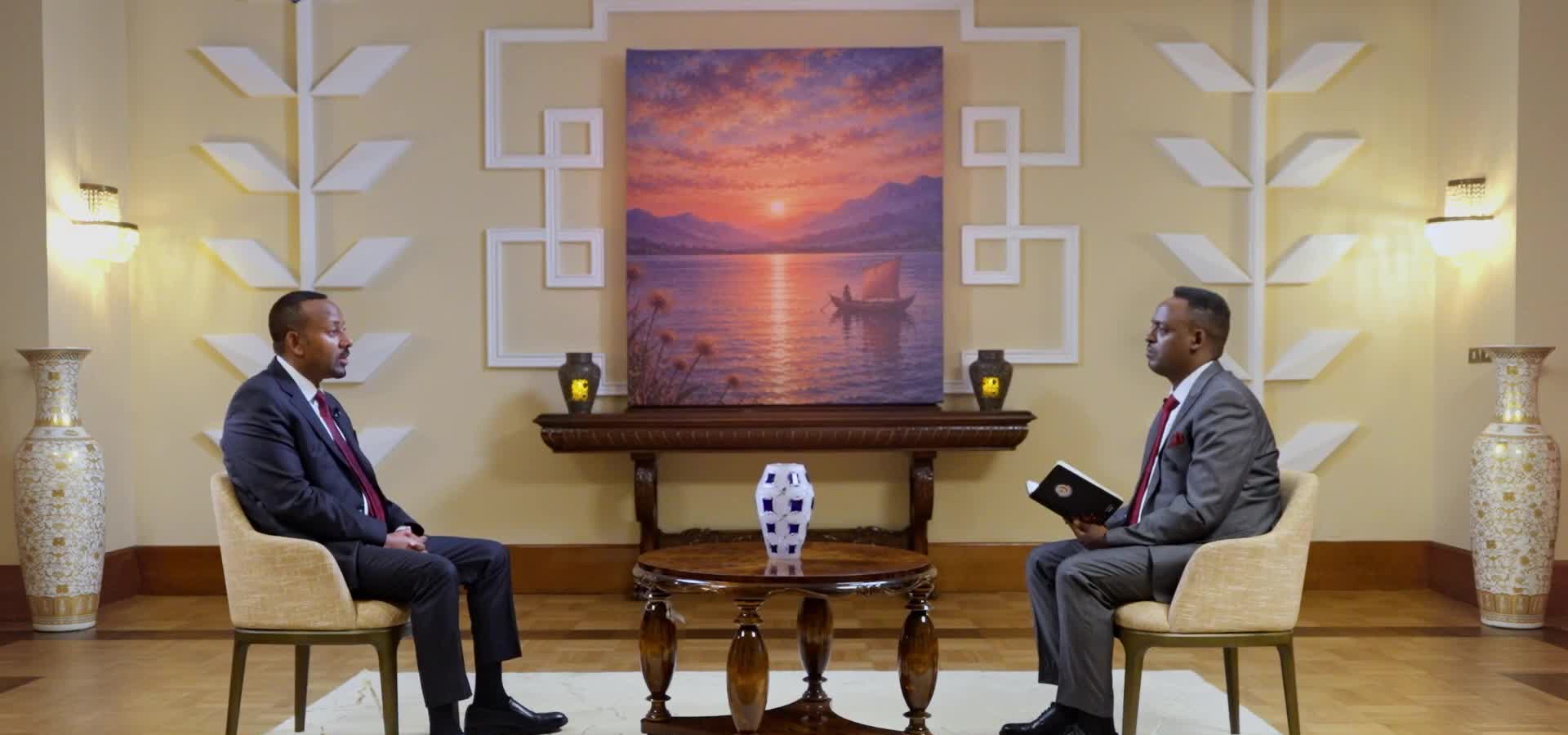
Prime Minister Abiy Ahmed, left, during his Tigrigna-language interview with the Ethiopian Broadcasting Corporation, in a still from the video posted on his X account on Oct. 19, 2026. [EBC via @AbiyAhmedAli on X]
Prime Minister Abiy Ahmed warned Eritrea’s leaders on Monday that ignoring Ethiopia’s calls for peace would bring what he called “very, very, very severe consequences,” in a Tigrigna-language interview with the Ethiopian Broadcasting Corporation (EBC) in which he also accused the Tigray People’s Liberation Front (TPLF) of breaking the 2022 Pretoria agreement and urged armed young people in Tigray to give up their weapons.
The 27-minute interview was posted on Abiy Ahmed’s X account at 2:25 p.m. ET on Monday, about 20 minutes after his office said it was about to be shown. AFP, which reported his remarks on Monday afternoon, said Abiy Ahmed had largely refused to comment on the weeks of fighting in the north of the country, and it described the speech as a warning to Eritrea against further interference.
“Serving as a base for Ethiopia’s enemies instead of being a partner in development will not bring benefits. I believe that ignoring our calls will have very, very, very severe consequences,” he said, in AFP’s translation.
Addis Standard rendered the same warning as “extremely severe” consequences.
Much of what he said about Eritrea compared its cities today with the years before independence in 1993. “When Eritrea was part of Ethiopia, its cities were vibrant and beautiful. Today, Eritrean cities seem like ghost towns,” he said, according to AFP. “Good neighbourly relations and partnership are the only way forward.” BBC Tigrinya, which published a long account of the interview on Tuesday, reported that he said Eritrea had about 300 factories when it was part of Ethiopia, that its largest city is now smaller than Arba Minch or Jijiga, and that “ባጽዕ ኵምራ ዑና ኰይና ተሪፋ እያ፤ ዓሰብ ድማ ባዲማ ኣላ” (“Massawa has been left a heap of ruins, and Assab is a wasteland,” in Zegabi’s translation). BBC Tigrinya added that President Isaias Afwerki had himself acknowledged the decline of the two ports in an earlier interview with Eri-TV, saying Massawa was once called the pearl of the Red Sea and that “ሎሚ ባጽዕ የላን። ዓሰብ እውን የላን” (“today there is no Massawa. There is no Assab either,” in Zegabi’s translation).
Abiy Ahmed accused the People’s Front for Democracy and Justice (PFDJ), Eritrea’s ruling party, of siding with forces hostile to Ethiopia and working against its interests, BBC Tigrinya reported. In a summary of the interview posted in Amharic, Sputnik Ethiopia quoted him as saying that those who tell Eritrea “አይዞህ” (“take heart”) cannot solve its problems “ጥይት ከማቀበል አልፈው” (“beyond handing over bullets,” in Zegabi’s translation).
Eritrea has repeatedly denied working with or supporting the TPLF and other armed groups in Ethiopia, BBC Tigrinya noted, and Eritrean Information Minister Yemane Gebremeskel told BBC Tigrinya in recent weeks that Ethiopia’s ruling Prosperity Party was trying to divert attention from its own internal conflicts. Neither Yemane nor Eritrea’s Ministry of Information had responded to the interview on X by 9:45 a.m. ET on Tuesday.
On the TPLF, Abiy Ahmed drew a line between the party and the people of Tigray. “The TPLF did not exist 50 years ago, and now its existence is coming to an end,” he said, according to AFP. BBC Tigrinya reported that he invoked Emperor Yohannes IV, saying “ሃጸይ ዮሃንስ ካብ ትግራይ ወጺኦም ንሃገር መሪሖም እዮም፡ ህወሓት ግን ይቕህም ኣሎ” (“Emperor Yohannes came out of Tigray and led the country, but the TPLF is fading,” in Zegabi’s translation), and that he said not even one kilometer of what is called “corridor development” had been built in Tigray while TPLF leaders concentrated on buying weapons, drones among them.
He said the federal government had kept its obligations under the Pretoria agreement while the TPLF failed to carry out its main provisions, kept up military preparations instead of disarming and did not properly support the disarmament, demobilization and reintegration (DDR) process, according to BBC Tigrinya. He appealed to young people under arms in Tigray to return to school, farming and work. The Ethiopian Embassy in London, in an English summary posted on X, rendered one of his lines to the young fighters as “Why should you die so that they can live comfortably?” Abay Times reported that he also urged the TPLF’s military and political leaders to surrender peacefully. “We will carry out development across all parts of Tigray. Until a regular administration is established through elections, our people should preserve their unity and institutions,” he said, according to AFP.
The TPLF and other Tigray officials have long argued that central parts of the Pretoria deal were never carried out, among them the safe return of displaced people, the withdrawal of non-federal forces from contested areas and guarantees for Tigray’s territorial integrity, BBC Tigrinya noted. It also pointed out that Abiy Ahmed’s government has itself been accused of widespread human rights violations against civilians during the last Tigray war. Zegabi found no response to the interview on the X accounts of the TPLF or Tigrai TV by Tuesday morning.
The interview came three days after the authorities in Addis Ababa set up a six-month caretaker administration for Tigray on Oct. 16. AFP said the TPLF fighters had been forced to retreat and lost control of the region, and that Eritrea, which it said had backed them, had deployed thousands of troops on Ethiopian territory before they too were forced back by drone strikes. Addis Ababa accuses Asmara of supporting Tigrayan forces and violating Ethiopian territory, and Eritrea has denied the accusations, DW reported on Monday. Abiy Ahmed was in Eldoret, Kenya, on Tuesday as the guest of honor at Kenya’s Mashujaa Day celebrations, his office said.
On X, the interview drew quick responses in Tigrigna, Arabic and English, most of them about what he said on Eritrea. Khalid A. (@AligidirEritrea), whose bio says he follows Horn of Africa political and economic news, disputed the factory figure, writing that while Eritrea “did have around 300 firms by the end of WWII and the defeat of Italian colonial rule, that industrial base was systematically dismantled and erased decades before 1991.” An account posting as Eri-Camel Marches (@benyrob12) recalled that on his first visit to Asmara in 2018, Abiy Ahmed had praised the city with the phrase “Asmara Tsa’ada,” which the account translated as “beautiful Asmara.” In Tigrigna, Tekle (@Freedom71851), whose bio says he posts news from an Eritrea First perspective, wrote that Shaebia, the popular name for Eritrea’s ruling front, “ስቅ ኢላ ዘላ” (“has gone quiet”), and an account posting as Hulum (@SeedHulum2) wrote that Massawa once “ሉል ባሕሪ ትመሰል” (“looked like a pearl of the sea”) and that “ብሰንክኹመ ሃገር ዓንያ” (“because of you, the country is ruined”), adding the hashtag RegimeChangeInEritrea. Musa Sheko (@MusaSheiko), whose bio describes him as a Horn of Africa analyst and senior researcher, wrote in Arabic that the sharpness of the warnings showed Addis Ababa did not regard the threats coming from Asmara as “صفحة طُويت” (“a page that has been turned”). Hassan Al-Naser (@hassanalnaser95) noted in Arabic that Abiy Ahmed gave the interview “مع لوحة بسفينة شراعية و مشهد شروق” (“with a painting of a sailboat and a sunrise”) behind him, and wrote that “تبقت لهذه المواجهة القليل” (“little time is left before this confrontation”). Translations from Tigrigna and Arabic are Zegabi’s. Zegabi has not verified the claims made in these posts.
Sources
- Abiy Ahmed (@AbiyAhmedAli) on X, EBC Tigrigna interview video, Oct. 19, 2026
- Office of the Prime Minister (@PMEthiopia) on X, interview notice, Oct. 19, 2026
- AFP via France 24, “Ethiopia PM warns Eritrea of ‘severe consequences’ if supports enemies,” Oct. 19, 2026
- BBC Tigrinya, “ቀ/ም ኣብይ ኣሕመድ ንኤርትራን ህወሓትን ዘመሓላለፎ መጠንቀቕታ,” Oct. 20, 2026
- Abay Times, “Abiy says TPLF broke Pretoria deal and warns Eritrea of grave consequences,” Oct. 19, 2026
- Addis Standard (@addisstandard) on X, “PM Abiy warns Eritrea of ‘extremely severe’ consequences if it rejects Ethiopia’s peace call amid rising tensions,” Oct. 20, 2026
- Sputnik Ethiopia (@sputnik_ethio) on X, Oct. 20, 2026
- Ethiopian Embassy London (@ETEmbassyLDN) on X, Oct. 19, 2026
- DW, “Can diplomacy stop another Ethiopia-Eritrea war?,” Oct. 19, 2026
- Office of the Prime Minister (@PMEthiopia) on X, arrival in Eldoret, Oct. 20, 2026
- Zegabi, “Ethiopian Gov’t Establishes Six-Month Caretaker Administration for Tigray and Names Five Officials Ahead of Planned Elections,” Oct. 16, 2026
- Khalid A. (@AligidirEritrea) on X, Oct. 19, 2026
- Eri-Camel Marches (@benyrob12) on X, Oct. 19, 2026
- Tekle (@Freedom71851) on X, Oct. 20, 2026
- Hulum (@SeedHulum2) on X, Oct. 19, 2026
- Musa Sheko (@MusaSheiko) on X, Oct. 19, 2026
- Hassan Al-Naser (@hassanalnaser95) on X, Oct. 20, 2026