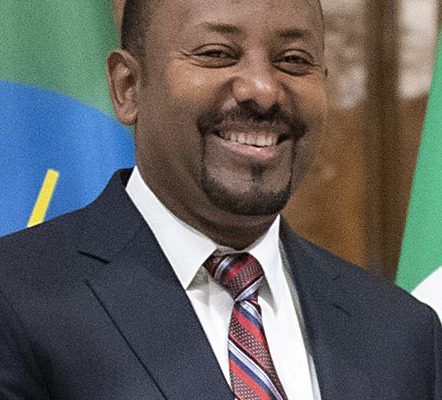
Abiy Ahmed Begins New Five-Year Term and Tells Parliament Ethiopia Will Keep Pushing for Red Sea Access
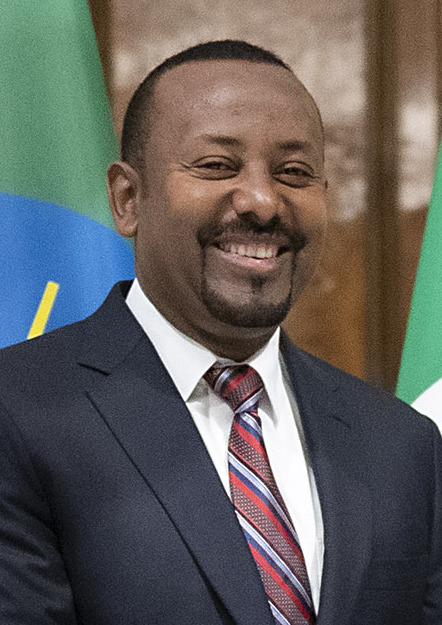
Abiy Ahmed at the Quirinale Palace in Rome, Feb. 6, 2023. [file photo] (Quirinale.it / Wikimedia Commons, attribution)
Abiy Ahmed was sworn in for a new five-year term as Ethiopia’s prime minister on Monday. In his first speech of the new mandate, he told parliament that his government will keep working to win the landlocked country an outlet to the Red Sea. The speech came at a time when fighting in Tigray is still going on, Eritrea has cut ties with Addis Ababa, and Ethiopia and Egypt have expelled each other’s diplomats.
The House of Peoples’ Representatives appointed him during the government-formation session of the seventh parliament, which follows the June 1 general election, and he then took the oath of office, the Ethiopian News Agency reported. The state agency said more than 54 million citizens took part in that election, citing the National Election Board of Ethiopia. The new term runs to 2031, according to UMD Media.
“Based on the principle of give and take, we will work diligently to ensure that Ethiopia has an outlet to the sea,” he said in the speech, as quoted by Al Jazeera and DW. Reuters quoted him as saying, “Ethiopia’s modernisation cannot be realised without sea access.” ENA carried a shorter version of the same promise: “We will work tirelessly to ensure Ethiopia secures a sea outlet.” Al Jazeera reported that he described access to the sea as critical to Ethiopia’s “civilisation.”
UMD Media, which followed the roughly 50-minute address, reported that he also said constitutional amendments would come “based on the recommendations of the National Dialogue,” and that “Ethiopia will build the capability necessary to establish air superiority in our region.” He did not say which parts of the constitution could change, when the process would start, or what the air power plan would involve. He also said Ethiopia would show that it has “a decisive role in regional affairs, not through the generosity of others, but through its own strength,” according to the same report.
ENA reported that he told lawmakers the country had paid a heavy price in the past because it was not ready, and that it has now made the preparations needed to confront what he called hostile acts against Ethiopia. “Getting tripped up by an obstacle once is natural, but stumbling repeatedly is not normal,” he said, in remarks carried by the agency.
On X, some critics claimed that the session was not live. Mesay Mekonnen (@mamamesay) wrote in Amharic on Monday that he was “getting information that today’s parliament session was pre-recorded and then broadcast,” and that information from “at least one elected MP” confirmed it. He suggested the reason was fear of a drone attack by the forces of the opposition alliance, and added, “Listening to this man is torture.” Journalist Mulugeta Anberber (@MulugetaAnberbr) posted a screenshot of the broadcast and claimed that “it was a Zoom meeting” and that President Taye Atske-Selassie “did it via Zoom.” He wrote that what was shown as if the president was sitting in the hall “has been exposed by the image in the background.” On Tuesday, Sirak Bahlbi (@SirakBahlbi), a supporter of the Eritrean government who has served as a public affairs officer at Eritrea’s embassy in Sweden, wrote that “all indications suggest that the whole drama was prerecorded” and called it “perhaps the most crazed speech I have heard him deliver.” These claims are unverified, and Zegabi could not confirm them.
The speech came one day after the leaders of Egypt, Eritrea, Somalia and Sudan met in New Alamein, Egypt, and said that governing the Red Sea is the job of the countries along its shores only. On Monday the Ethiopian Foreign Ministry answered that any talks on the Red Sea must take into account the country’s “legitimate interests and enduring connection” to it, Al Jazeera reported. Eritrea has said it fears the authorities in Addis Ababa will try to take its port of Assab by force, while Abiy Ahmed has said Ethiopia wants sea access through peaceful means, according to Reuters.
Tom Gardner (@TomGardner18), a journalist and the author of “The Abiy Project,” shared “Red Sea Generation” graphics from the Ethiopian state broadcaster EBC on Monday and wrote: “More helpfully de-escalatory rhetoric from Ethiopian state media.” Eritrea’s information minister, Yemane G. Meskel (@hawelti) answered the Foreign Ministry statement the same day. He wrote that “Ethiopia enjoys unfettered access to all ports in the Horn of Africa” and said Ethiopia’s claim that being close to the Red Sea gives it the rights of coastal states “is too ludicrous and hollow in purely legal terms to merit response.” On Tuesday, the Eritrean Ministry of Information’s account (@shabait) posted an editorial in Tigrinya. It said Abiy’s ruling Prosperity Party “is heard boasting, without hesitation, that the war it lit against the people of Tigray will end at Assab,” and it said it was important, “as always,” to “be ready for anything.”
Last week Ethiopia closed its embassy in Asmara and expelled 10 Eritrean diplomats, after which Eritrea said it was severing diplomatic ties. Ethiopia also expelled an Egyptian diplomat, and Egypt responded by expelling a counselor at the Ethiopian embassy in Cairo, Al Jazeera reported. The federal government in Addis Ababa has accused Eritrea, Sudan and Egypt of backing the armed opposition in Tigray, which all three deny. DW reported that on Monday a pro-government media outlet said the army had begun moving troops toward the Eritrean border after forces of the Tigray People’s Liberation Front (TPLF) fell back to the area near Adigrat. Zegabi could not confirm that report.
DW correspondent Solomon Muchie, who followed the swearing-in in Addis Ababa, said the new term gives the prime minister “stronger political authority,” but that “the country’s complex internal and regional challenges could make it difficult to translate the authority into lasting stability.” Abdurahman Sayed, who leads the London-based Horn of Africa Center for Regional Integration, told DW that Eritrea has “legitimate concern” that Ethiopia intends to occupy it or, failing that, take the port of Assab, which he noted overlooks the Bab el-Mandeb Strait at the southern entrance to the Red Sea.
Some neighbors sent congratulations. Somalia’s president, Hassan Sheikh Mohamud, who attended the Egypt meeting, wrote on X that he looks forward to working closely with Ethiopia “to strengthen Somalia-Ethiopia relations,” Al Jazeera reported. Burundi’s president, Evariste Ndayishimiye, and African Union Commission chairperson Mahmoud Ali Youssouf also sent messages.
Sources
- Ethiopian News Agency (ENA), “Ethiopia Ready to Repel Threats, Affirms PM Abiy Ahmed”
- Ethiopian News Agency (ENA), “Ethiopia to Reassert Regional Influence, Secure Sea Access, Says PM Abiy”
- Al Jazeera, “Ethiopian PM Abiy demands Red Sea access as tensions with neighbours rise”
- Al Jazeera, “Eritrea severs diplomatic ties with Ethiopia in tit-for-tat move”
- DW, “Ethiopia: Abiy begins new term as regional tensions mount”
- Reuters via The Hindu, “Airstrikes, artillery hit north Ethiopia as government and rebels clash, sources say”
- UMD Media, “Abiy Ahmed’s Reappointment Speech: Sea Access, Constitutional Change and Regional Air Superiority Take Center Stage”