Sudan Says Drones That Hit Its Power Stations Were Launched From Ethiopia, Including Bahir Dar Airport
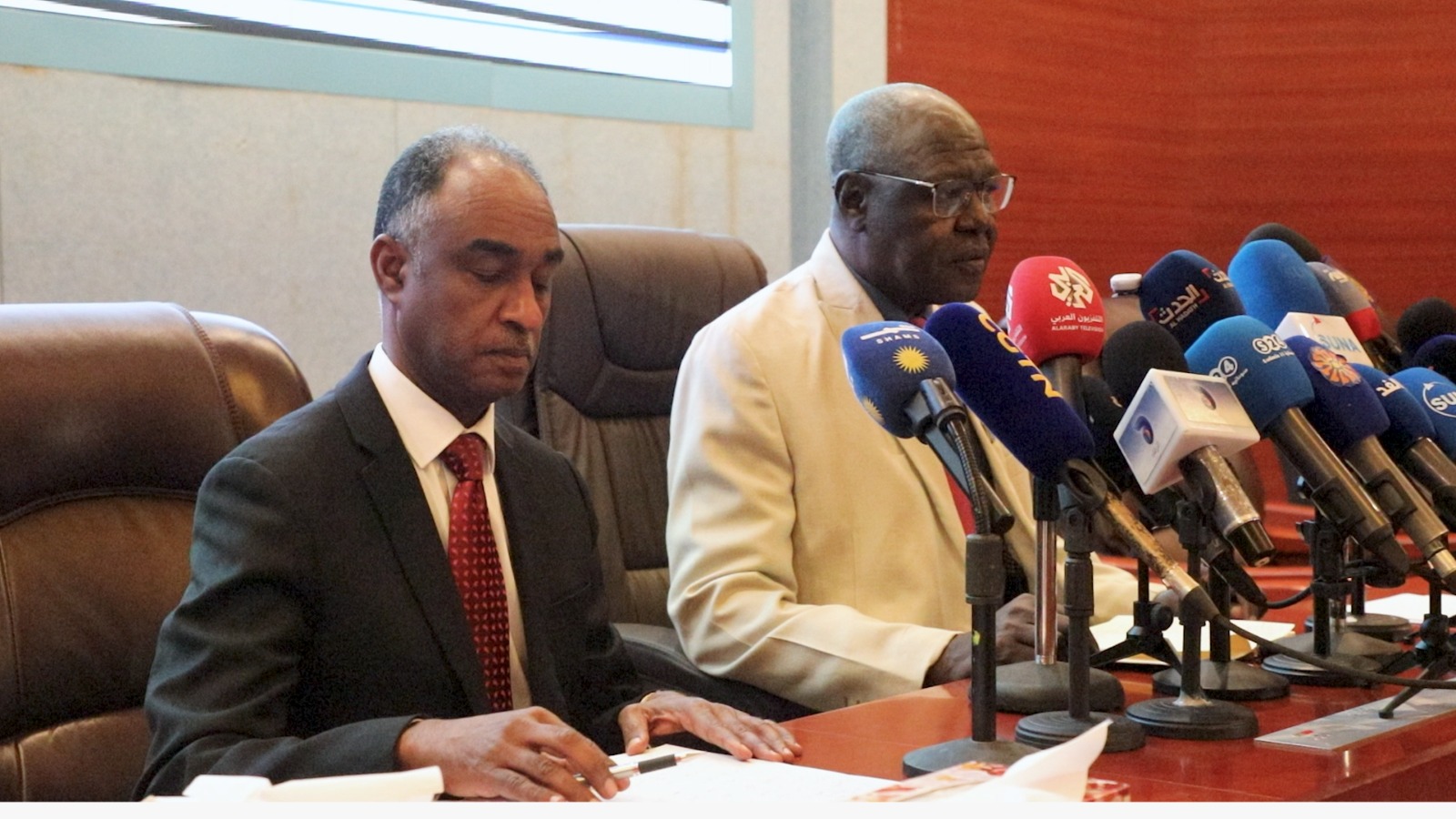
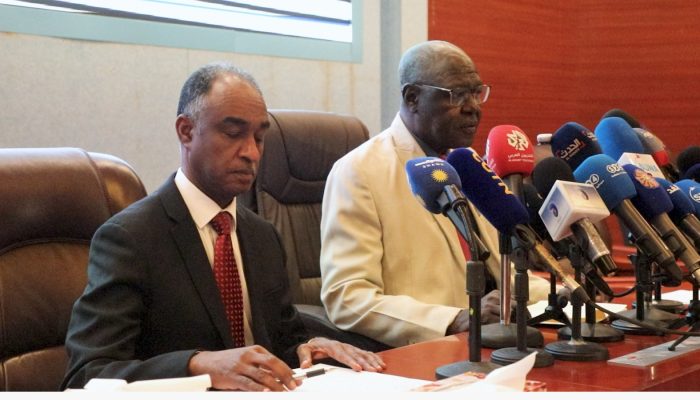
Sudanese officials at the joint news conference in Khartoum on Oct. 28, in a photo published with the Sudan News Agency’s report. [SUNA]
Sudan’s government said on Wednesday that it had evidence that drones used in a wave of attacks on its power stations, fuel depots and other civilian sites were launched from inside Ethiopia, including from Bahir Dar Airport in the Amhara region, and a senior Sudanese diplomat accused Ethiopia and the United Arab Emirates of aggression against his country.
Officials from Sudan’s defense, foreign affairs and information ministries and the General Intelligence Service made the accusation at a joint news conference in Khartoum organized by the Sudan News Agency. They displayed drones that they said the army’s air defenses had intercepted, and a presentation said data pulled from the downed drones “using advanced software” showed launch coordinates inside Ethiopia, including Bahir Dar Airport, with satellite imagery cited as further evidence, SUNA reported. The presentation said the targets were “exclusively civilian” and that the attacks were meant to stop people from returning to their homes.
The latest strike, on Wednesday, knocked out the power station in El Manaqil in Gezira state and left the town and the surrounding area in the dark, Radio Tamazuj reported. A day earlier a drone strike disabled the Markhiyat power station northwest of Omdurman and cut electricity across parts of the capital area, the seventh attack on the power grid in a week, and drones also hit fuel storage sites and a pipeline linked to Bashayer Port in Red Sea state, Sudan Tribune reported.
Muawiya Osman Khalid, the Foreign Ministry undersecretary, called on the world not to overlook what he called an Ethiopian-Emirati aggression against Sudan and said his country retained the right to defend its territory, Sudan Tribune reported. “Ethiopia has not been deterred and has continued its aggression against Sudan,” he said, according to Anadolu Agency, which said he described the launches as “a dangerous development that could undermine security and stability in the region” and drew a line between the Ethiopian government and the Ethiopian people. “We exercised the utmost restraint and kept away from escalation,” he said, in remarks carried in Arabic by Asharq News, which also quoted him as saying, “We reserve our right to respond.”
Radio Tamazuj and Sudan Now said they could not independently verify the evidence or where the drones came from, and Sudan Tribune, in a report that cited Reuters, said the flight data could not be verified either. Sudan Now noted that the authorities in Khartoum blame the Rapid Support Forces for the attacks on power stations and did not say whether they believed Ethiopian officials themselves launched or helped launch the drones. Neither the Ethiopian Government nor the UAE could immediately be reached for comment, Sudan Tribune and Addis Standard reported, and Ethiopia’s Foreign Ministry had said nothing about the new accusation on its X account by Thursday morning. The UAE has denied supporting the RSF, Addis Standard noted.
It is not the first time Khartoum has pointed at Bahir Dar. In May, after drones hit Khartoum airport, Sudan’s army spokesman said attacks launched from Bahir Dar Airport had begun on March 1, Al-Monitor reported, and Sudan recalled its ambassador to Ethiopia. The Ethiopian Foreign Ministry rejected those “baseless accusations” at the time and said it had “exercised restraint and refrained from publicizing the grave violations of Ethiopia’s territorial integrity and national security” by some of the warring sides in Sudan, accusing the Sudanese army of making extensive use of “Tigray People’s Liberation Front mercenaries,” Xinhua reported.
Bahir Dar is the capital of the Amhara region, where Abiy Ahmed’s regime has been at war with Fano forces for three years and where the UN said drone strikes killed at least 15 civilians in eastern Amhara in a single week, as Zegabi reported. The accusation also landed during the Russia-Africa summit in Moscow. Lt. Gen. Abdel Fattah al-Burhan, the head of Sudan’s Sovereignty Council, arrived in the Russian capital on Thursday to lead Sudan’s delegation, SUNA said, a day after Prime Minister Abiy Ahmed held talks with President Vladimir Putin at the Kremlin, where the Russian officials at the table included the head of the Federal Service for Military-Technical Cooperation and the chief executive of the arms exporter Rosoboronexport, according to the Kremlin.
On X, the accusation was followed closely in Arabic. Hours before the briefing, the account Civil Front for Resisting the Rebellion (@freedomdoctors) wrote in Sudanese Arabic that “the Russians claim they are our friends,” yet would not deliver to Sudan the last deal agreed under Omar al-Bashir “while they deliver advanced aircraft to Ethiopia,” and complained that “no friendly country has condemned Ethiopia and its drones.” Peter Germanos (@GermanosPeter), whose X bio describes him as a geopolitical analyst, wrote in Arabic, “Sudan is sinking into darkness!” In English, the open source analyst Rich Tedd (@AfriMEOSINT) wrote in a thread that since February “a total of 64 drone attacks in Sudan have been confirmed as originating from Ethiopian territory, including ENDF airbases and airports, in support of the RSF,” and added that the Sudanese army’s figures showed at least five Turkish-made drones from Ethiopia had been shot down since May, noting that Ethiopian army Bayraktar TB2s “have previously been spotted at both Asosa & Bahir Dar airports.”
Sources
- SUNA, “Government Presents Documented Evidence of Ethiopian Involvement in Drone Attacks on Civilian Infrastructure,” Oct. 28, 2026
- Radio Tamazuj, “Sudan accuses Ethiopia of involvement in drone strikes on infrastructure,” Oct. 28, 2026
- Sudan Tribune, “Sudan accuses Ethiopia of launching drone strikes on civilian infrastructure and power stations,” Oct. 28, 2026
- Anadolu Agency, Sudan accuses Ethiopia of allowing drone attacks from its territory, Oct. 29, 2026
- Asharq News Sudan (@AsharqNewsSUD) on X, Muawiya Osman Khalid remarks, Oct. 28, 2026
- Sudan Now, Sudan says evidence shows drones launched from Ethiopia, Oct. 28, 2026
- Addis Standard via allAfrica, Sudan again accuses Ethiopia over drone strikes, Oct. 29, 2026
- BBC Tigrinya live page, Sudan accuses Ethiopia over drone attacks, Oct. 29, 2026
- Al-Monitor, “Ethiopia rejects Sudan’s strike claims, accuses Khartoum of backing Tigray rebels,” May 2026
- AP, Sudan recalls ambassador to Ethiopia over drone attacks, May 2026
- Xinhua, Ethiopia rejects Sudan’s drone accusations, May 5, 2026
- Zegabi, “UN Says Drone Strikes Killed at Least 15 Civilians in Eastern Amhara in One Week,” Oct. 24, 2026
- SUNA (@SUNA_AGENCY) on X, Burhan arrives in Moscow, Oct. 29, 2026
- Kremlin, “Meeting with Prime Minister of Ethiopia Abiy Ahmed,” Oct. 28, 2026
- Civil Front for Resisting the Rebellion (@freedomdoctors) on X, Oct. 28, 2026
- Peter Germanos (@GermanosPeter) on X, Oct. 29, 2026
- Rich Tedd (@AfriMEOSINT) on X, thread on drone launches from Ethiopia, Oct. 28, 2026
- Mereja TV (@merejatv) on X, Bahir Dar Airport drone shelters, Oct. 29, 2026