Ethiopians Flee Into Kenya as Fighting Between Oromia and Somali Regional Forces Spreads Beyond Moyale and Kenya Sends Troops to the Border, Reports Say
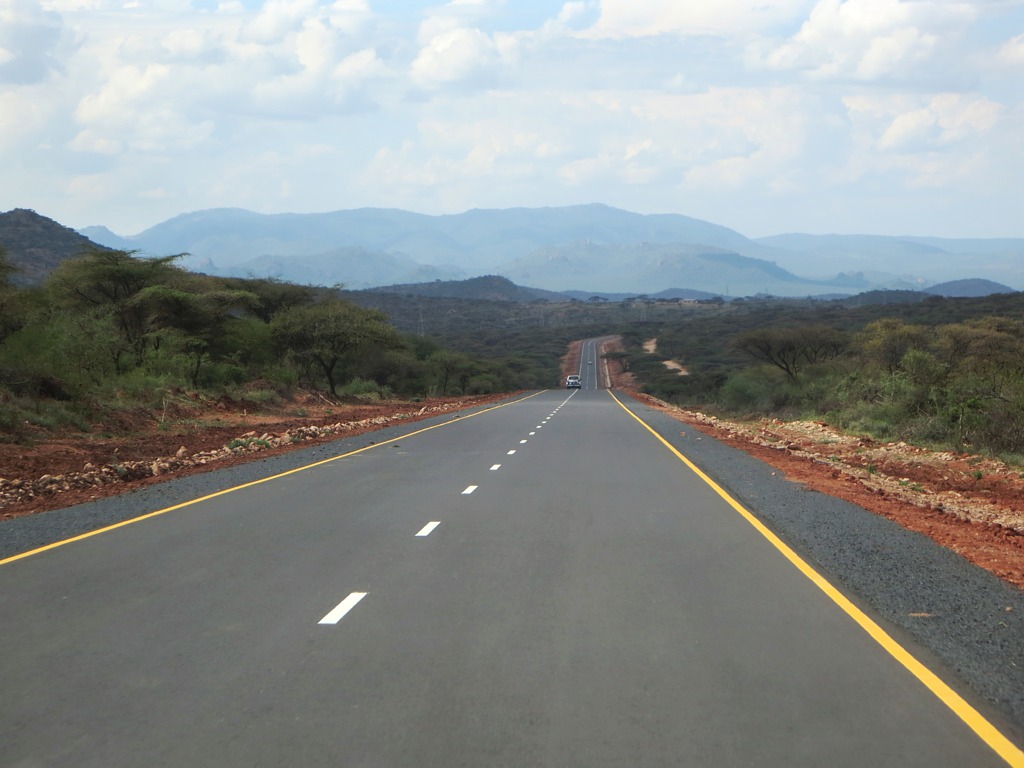
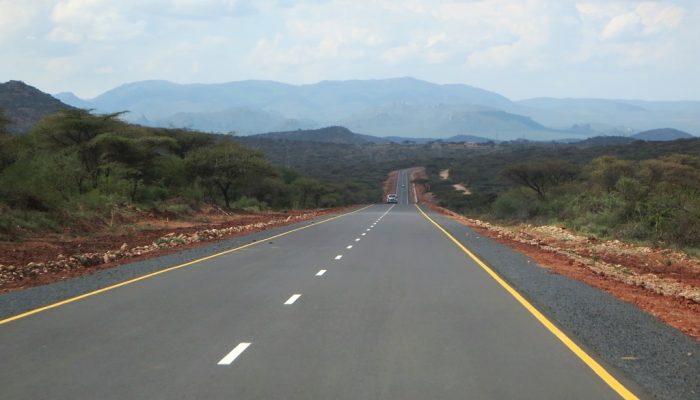
The highway that runs from the Kenyan border at Moyale to Addis Ababa, in 2013. [file photo] [Wikimedia Commons, David Stanley, CC BY 2.0]
Fighting between security forces from Ethiopia’s Oromia and Somali regions spread from the border town of Moyale into three more districts of southern Oromia on Thursday and was still going on Friday morning, Ethiopian and Kenyan media reported, as hundreds of Ethiopians, most of them women and children, crossed into Kenya and the Kenyan army sent troops to the border.
Residents and local security officials told Addis Standard that gunfire broke out at about 5:30 a.m. on Thursday in several parts of Moyale, including Malab, Chamuk, Bole, Kebele 01 and Waqo Dogo, and that by the afternoon the clashes had reached Melka Guba kebele in Gumi Eldallo district, Melka Adi and Melka Chophi kebeles in Wachile district, and an area called Ela Orbi in Arero district, all in the East Borana zone. Security officials from both sides confirmed that people had been killed and wounded, the outlet said, but neither side would give numbers, citing the need to keep operations secret. Eyewitnesses told Addis Standard that by the time its report was written, neither the Ethiopian National Defense Force nor the Federal Police had stepped in. Accounts of when the fighting began differ. Residents told Reuters it broke out on Wednesday, while Addis Standard’s sources put the start of open clashes at dawn on Thursday. On Friday morning, residents told Kenya’s Daily Nation, fighting was reported in Moyale and in Hudhat district on the Somali side, in what the paper said was the fourth day of the conflict.
The two sides gave Addis Standard opposite accounts of who started it. Waqo Hussein, a Moyale resident, pointed to attempts by Somali Regional State special forces to raise their flag, the killing of 13-year-old Diqqoo Jaataan Aagaa on Oct. 18, and unverified rumors of an attempt on a city official’s life on Tuesday evening, and said of Thursday’s fighting, “We took measures to defend and protect ourselves.” A Moyale town official on the Oromia side called it “a war declared on our people early in the morning by forces who have recently been making various provocations.” A Somali resident who fled with his family to the Ilu area of Moyale, Kenya, told the outlet, “This morning, October 22, it was forces from the Borana side who opened fire on us; they prevented us from raising our flag,” and said forces from the Borana side then burned houses belonging to Garre residents, along with offices and signboards. Another resident, from the Chamuk area, said Somali regional forces with heavy weapons had attacked them.
No one has published a confirmed death toll. Abdirahman Karama, an aid worker in Moyale, told the BBC that on the Somali side “many houses have been destroyed. So far four people have been killed and 11 wounded,” in BBC Amharic’s translation of his remarks to BBC Somali. A resident on the Oromia side told BBC Amharic that about six people had died on Thursday, and another said that “a 10-year-old passerby” had been killed. Residents described security men “with snipers and DShKs set up on buildings,” so that nobody moved on the streets. BBC said it could not confirm the number of dead from an independent source and could not reach Somali Region officials. Kenya’s Standard newspaper said reports indicated scores had been killed on both sides, in fighting it said was going on in at least five settlements between 5 and 30 kilometers from Kenya’s Moyale town.
On the Kenyan side, police reported gunfire and chaotic scenes on Thursday and said people were crossing at several points, including Sessi, Kore, Biashara, Foundation and Miti, Al Jazeera reported, citing AP and Reuters. “We have hundreds of people from Ethiopia, mainly children and women,” Stanley Kamande, the Marsabit county commissioner, told Reuters, adding that many were staying with relatives and well-wishers in villages on the Kenyan side. Residents told the Nation that thousands had crossed, and that hundreds were being housed at Manyatta Madrassa in Heillu Manyatta Ward. A police report seen by Reuters said a stray bullet had lodged in the neck of a woman in Kenya’s Moyale town; the bullet was removed at a private hospital and she was in stable condition. “On Thursday, stray bullets hit some people and buildings on the Kenyan side,” Ali Abdullahi, a resident, told the Nation, and said the fighting was about five kilometers from the Kenyan town. Ali Mumin, a businessman, said some businesses, including banks, had closed.
The Standard reported that a Kenya Defence Forces detachment from Odha Camp had joined the General Service Unit and border police patrolling the Moyale crossing. Kamande told the paper the aim was “to ensure we do not have a cross-border incursion from the Ethiopian side and which we do not expect and also to provide security to those (fleeing civilians) seeking our help.”
The Kenya Red Cross said in a statement late on Thursday that its first response would reach 1,000 households, and that it had begun setting up temporary shelter and handing out tents, blankets, sleeping mats, jerrycans, kitchen sets and a fortified porridge flour for young children and for pregnant and breastfeeding mothers. The displaced families had arrived with few belongings and urgently needed shelter, food, safe water and health care, the statement said. “Our priority is to make sure every family arriving in Moyale is safe, sheltered and treated with dignity,” said Ahmed Idris, its secretary general. The group said it was also giving first aid and helping separated families find each other. A day earlier, a Red Cross official, Ibrae John, had told Reuters, “No camp is ready to host those displaced but we shall most definitely work on it.” Local officials on the Kenyan side were due to meet on Friday to coordinate help for the displaced, Reuters said.
Inside Ethiopia, residents told BBC Amharic that the road from Moyale to Addis Ababa had been closed and that shops in the town were shut. “Today there are DShKs, mortars and so on, and the people have been fleeing since the night, into the bush and across the border into Kenya,” one resident said. “There is no food; children and the people are suffering from hunger.”
The fighting follows a week of tension that began on Sunday, Oct. 18, when the Somali Region opened a new administration office in Kebele 02 of Moyale and raised its flag there, and the 13-year-old girl was shot dead in the gunfire that followed, as Zegabi reported on Thursday. Addis Standard recalled that tension along the Oromia and Somali border grew in July and August 2025 after the Somali Regional State approved a plan creating new woredas and zones, and that later clashes along the border displaced more than 288,000 people.
By 9:40 a.m. ET on Friday, Zegabi had not found a public statement on the fighting from the federal government in Addis Ababa, from the Ethiopian army, or from the Oromia or Somali regional governments.
On X, accounts from both communities blamed the other side, and none of their claims could be checked. In Amharic, an account posting as ልሳነ ሰሊፍ (@egziabherhoy) wrote on Friday, “አንድ የክልል መንግስት ከሌላው ጋር በአንድ ከተማ ዙሪያ መዋጋት አሁን ምን ይሉታል። ምን አይነት ስርአት አልበኝነት ነው።” (“What do you call it now when one regional government fights another over a town? What kind of lawlessness is this?”) and said the federal government should punish the officials behind it. Writing in Somali early on Friday, Sultan Abdiraxman (@BestSeller2026), whose bio describes him as a writer and security and political analyst, said Oromo forces had launched an attack “subixii labaad” (“for a second morning”) on Moyale and on Hudhet district in the Dawa zone, that Somali residents of Hudhet were resisting, and that “ilaa hada ma jirto war rasmi ah oo ka soo baxay Dowlada Federalka Ethiopia” (“so far there has been no official word from Ethiopia’s federal government”). In Afaan Oromoo, an account posting as Murataa Murtii Dhugaa (@kaliifaa_m97369) wrote that “Lolli Oromiyaa gama Kibbaan Ummata Oromoo Booranaa irratti Baname” (“the war opened against the Oromo people of Borana in southern Oromia”) was causing great harm to lives and property. Abdirizak Muhumed (@Abdirik), writing in English, said “thousands of Somalis were displaced” and that “three towns, Jamuk Malka-guba, & Baladul-amin have been torched.” In Kenya, Gitau Gatonye (@Gitaooh), whose bio says he chairs the Kenol Bloggers Association, wrote, “What is happening in Moyaale Ethiopia is a security risk to kenya.” Translations from Amharic, Somali and Afaan Oromoo are Zegabi’s. Zegabi has not verified the claims made in these posts.
Sources
- Addis Standard via allAfrica, “Fighting in Border Town Moyale Spreads to Three More Districts, Exchange of Heavy Gunfire,” Oct. 22, 2026
- Addis Standard (@addisstandard) on X, Oct. 22, 2026
- BBC News Amharic, “በሞያሌ ከተማ በተቀሰቀሰ ግጭት የነዋሪዎች ሕይወት ሲጠፋ፣ በርካቶች ወደ ኬንያ ተሰደዱ,” Oct. 22, 2026
- BBC News Somali, “Wararkii ugu dambeeyay xaaladda magaalada Mooyaale oo uu iska hor imaad ka dhacay,” Oct. 23, 2026
- Reuters via StreetInsider, “Hundreds of Ethiopians flee into Kenya after border town fighting,” Oct. 22, 2026
- Reuters via The Star (Malaysia), “Kenya Red Cross rushes aid to Ethiopians who crossed border fleeing violence,” Oct. 23, 2026
- Al Jazeera (with AP and Reuters), “Hundreds of Ethiopians cross into Kenya to flee regional fighting,” Oct. 22, 2026
- Daily Nation, “Moyale on edge: Thousands flee into Kenya as clashes in Ethiopia intensify,” Oct. 23, 2026
- The Standard (Kenya), “Army deployed in Moyale as Ethiopians flee tribal violence seek refuge,” Oct. 23, 2026
- Kenya Red Cross (@KenyaRedCross) on X, statement on the Moyale response, Oct. 22, 2026
- Kenya Red Cross (@KenyaRedCross) on X, Oct. 23, 2026
- Zegabi, “Buildings Burn in Moyale as Fresh Clashes Between Oromo and Somali Communities Follow the Killing of a 13-Year-Old Girl in a Flag Dispute, Reports Say,” Oct. 22, 2026
- ልሳነ ሰሊፍ (@egziabherhoy) on X, Oct. 23, 2026
- Sultan Abdiraxman (@BestSeller2026) on X, Oct. 23, 2026
- Murataa Murtii Dhugaa (@kaliifaa_m97369) on X, Oct. 23, 2026
- Abdirizak Muhumed (@Abdirik) on X, Oct. 23, 2026
- Gitau Gatonye (@Gitaooh) on X, Oct. 23, 2026