Buildings Burn in Moyale as Fresh Clashes Between Oromo and Somali Communities Follow the Killing of a 13-Year-Old Girl in a Flag Dispute, Reports Say
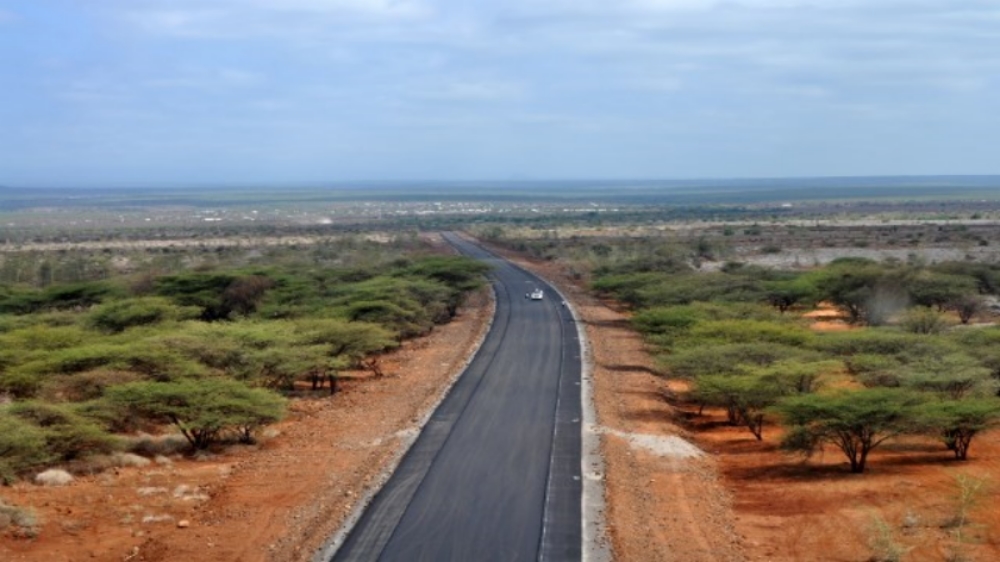
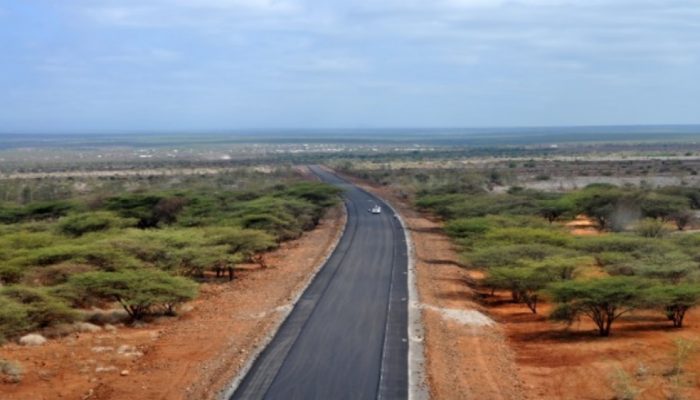
The road leading to Moyale, the town split between Ethiopia and Kenya, in 2015. [file photo] [Wikimedia Commons, george kaguangi, CC BY-SA 2.0]
Fresh clashes broke out on Thursday morning in Moyale, the town that straddles Ethiopia’s border with Kenya, with possible casualties and buildings set on fire, Kenyan and Swiss media reported, four days after a 13-year-old girl was killed in a dispute over the raising of the Somali Region’s flag.
Kenyans.co.ke said the fighting, reportedly between Oromo and Somali communities, started in the Chamuq area, and that initial reports spoke of several people feared injured and several buildings reportedly set ablaze; its headline said several were feared dead. A Swiss and Italian news agency report carried by the Swiss daily laRegione, citing local media, said no official death toll had been released. Zegabi has not seen any confirmed figure from the authorities in Addis Ababa, from either regional government or from a hospital.
The trouble started on Sunday, Oct. 18. Residents told Addis Standard that the Somali Region had opened a new administration office in Kebele 02 of Moyale, a town in the Borana zone of the Oromia region, and raised its regional flag there, and that this set off an exchange of gunfire between Somali regional forces and Oromia local militias. The girl was killed in that shooting. Her uncle, Shuraa Waariyoo, identified her to Addis Standard as Diqqoo Jaataan Aagaa.
How she died is still disputed. Mallicha Diida, a resident of Kebele 02, told Addis Standard that Somali Region police shot her and called it an act of “cruelty and lawlessness.” A resident on the Somali side told the outlet that the Somali-side town administration had only moved its office, that Oromia militias opened fire on the Somali police when they tried to bring in equipment and raise the flag, and that “the young girl was killed in the middle of this, but Somali Region security forces did not target or kill that child.” A security official who spoke to Addis Standard said Somali Region forces killed her, and that the shooting went on for several minutes before the Ethiopian National Defense Force stepped in and stopped it. Shuraa said Somali Region forces had taken the body and that it had not been buried as of Tuesday.
Galmaa Korophichaa, the mayor of Moyale on the Oromia side, told BBC Afaan Oromoo in an interview published early Thursday that the girl was from a Borana family and was shot when she tried to take the flag down. He said elders from the Borana, the Somali and the Garre had looked at the case and agreed that her body should be returned to her family, but that the other side refused, saying it had already buried her. He also said his car was attacked as he went out to check on the town after the protests began, which he called an attempt on his life by Somali regional security forces. “I was not hurt and I got out safely, but the car was badly damaged,” he said, in Zegabi’s translation. Asked whether anyone knows where the boundary between the two regions runs, he said, “There is none. Up to now there is nothing decided that the people or the government know.” BBC Afaan Oromoo said it called the Somali-side administration of Moyale several times but was told officials were in a meeting.
Elders and security officials agreed to remove the Somali Region’s flag from the disputed office, Addis Standard reported, and Kenyans.co.ke said it was taken down on Wednesday, which set off counter-protests by some residents. Transport between Moyale and Addis Ababa and between Moyale and Nairobi was suspended on Monday and Tuesday, according to Kenyans.co.ke, and businesses and several schools closed. Addis Standard said talks between security forces from both regions and the federal army after the killing had failed to produce an agreement.
Moyale has a long history of this kind of violence between Borana communities in Oromia and Garre communities in the Somali Region. Kenyans.co.ke recalled clashes in December 2018 that it said left 21 people dead and 61 injured and sent about 5,000 people across the border into Kenya. Addis Standard said tensions grew in July and August 2025 after the Somali Regional State approved a restructuring that created new woredas and zones.
By 9:40 a.m. ET on Thursday, Zegabi had not found a public statement on Thursday’s fighting from the Oromia or Somali regional governments or from the federal government in Addis Ababa.
On X, posts from both sides of the town gave very different accounts, and none of them could be checked. Abdirahman Ilkacase (@abmusechennel), whose bio says he is a news director at SNTV, wrote on Thursday morning that “reports from #Moyale … indicate that forces loyal to the Oromia regional administration have attacked Somali civilian pastoralists.” Najiib Dhayib (@Najiibkoris), who describes himself as a freelance journalist, posted overnight that “Oromia regional forces reportedly attack the Somali side” and that fighting was reported “near Jamuq Center and inside the city.” Writing in Afaan Oromoo, Qilxuu Jiloo (@Qilxuu_Jiloo), whose bio lists him as a former blogger and news correspondent, said on Wednesday that “the enemy” was fighting hard “to take by force” Moyale’s great trade route and what he called Oromo land, and used the hashtag #SomaliFlagOutOfOromia. In Amharic, Molla Dagnew (@Dagnew1Molla) wrote that in the continuing protests “የነዳጅ ማደያን ጨምሮ ቤቶች እየተቃጠሉ ነው” (“houses, including a fuel station, are being burned”) and that many residents were leaving the town. On Wednesday evening Hussen Ali (@HusenA59247), whose bio says he is a water resources engineer, wrote that the population of Moyale “has reportedly been displaced to the Kenyan side” and asked for humanitarian help. An account posting as Truly African (@true_African1) wrote, “Moyale cannot afford more violence. The deaths and destruction in Chamuq demand urgent intervention.” Translations from Amharic and Afaan Oromoo are Zegabi’s. Zegabi has not verified the claims made in these posts.
Sources
- Kenyans.co.ke, “Buildings Torched, Several Feared Dead as Communities Clash in Moyale,” Oct. 22, 2026
- Addis Standard via allAfrica, “13-Year-Old Girl Killed After Flag Dispute in Borana’s Moyale: Protesters Block Transport Services,” Oct. 20, 2026
- Addis Standard (@addisstandard) on X, Oct. 20, 2026
- BBC News Afaan Oromoo, “Moyyaaleetti taateen lubbuu shamarree galaafate, kantiibaa yaalii ajjeechaaf saaxile maali?,” Oct. 22, 2026
- laRegione (ats/ans), “Incendi e possibili vittime in scontri al confine tra Kenya ed Etiopia a Moyale,” Oct. 22, 2026
- Abdirahman Ilkacase (@abmusechennel) on X, Oct. 22, 2026
- Najiib Dhayib (@Najiibkoris) on X, Oct. 22, 2026
- Qilxuu Jiloo (@Qilxuu_Jiloo) on X, Oct. 21, 2026
- Molla Dagnew (@Dagnew1Molla) on X, Oct. 22, 2026
- Hussen Ali (@HusenA59247) on X, Oct. 21, 2026
- Truly African (@true_African1) on X, Oct. 22, 2026