Refugees International Says Hunger and Child Malnutrition in Tigray Were Already Severe Before the Fighting Resumed
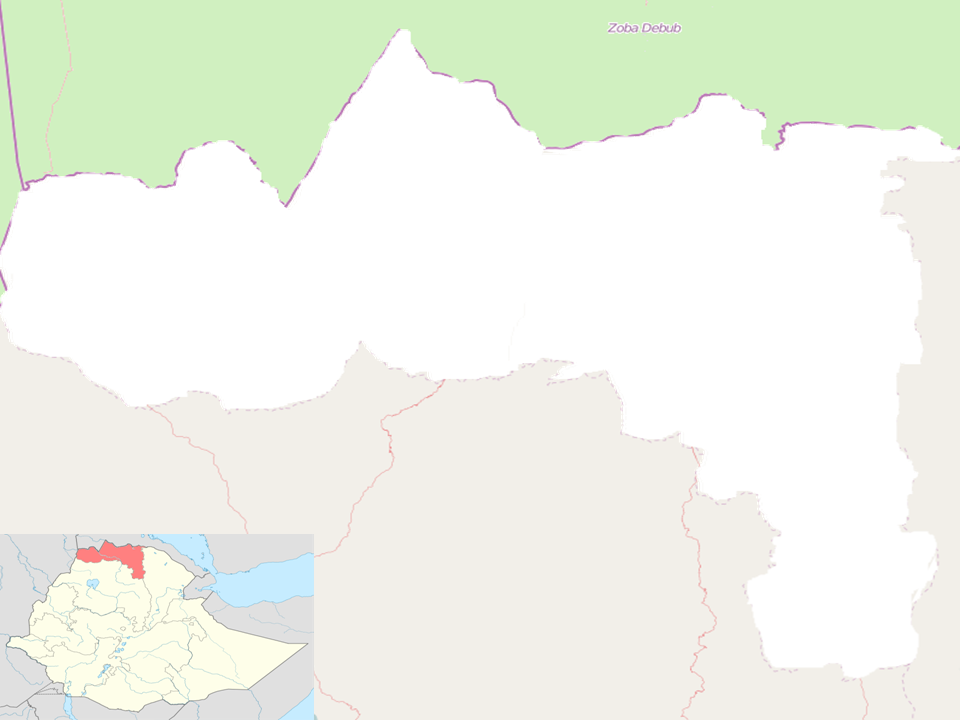
Map of the Tigray region in Ethiopia: Dr. Blofeld/Wikimedia Commons, from OpenStreetMap, CC BY-SA 2.0.
A survey of more than 450 households in Tigray found that hunger and child malnutrition were already severe in August and September, before the fighting started again, Refugees International said on Friday.
The Washington-based group said local experts working with it surveyed 452 households with young children in four places in Tigray, 250 of them in sites for displaced people and 202 in host communities, and interviewed district and regional officials. In the displacement sites, six in ten households said someone had gone to sleep hungry in the past month, and nearly eight in ten said adults were eating less so that the children could eat. Most were buying food on credit or borrowing it. Only 4 percent of displaced households said they had received food aid, although nearly all had received some cash. In the host communities, four in ten households said someone had gone to bed hungry, and food aid reached almost none of them, according to the group’s brief.
Arm-circumference screening found 23 percent of the children in the displacement sites below the cut-off for acute malnutrition, including 4 percent below the cut-off for severe acute malnutrition. In the host communities 32 percent were below the cut-off, including 4 percent in the severe range, but the group said the rates varied widely between the two host districts, one of which was picked because malnutrition there was already known to be high. Refugees International said its figures describe the households it surveyed and should not be read as estimates for Tigray as a whole. Only half of the health facilities in the four areas could treat the most complicated cases of severe malnutrition, it said.
Health officials told the group that Tigray’s health sector needs about 130,000 liters of fuel a month to run its ambulances and the generators that keep medicines cold, and that by September it was getting none. That left more than 250 ambulances and 740 outreach vehicles standing idle. The region’s Trade and Export Agency said fuel deliveries to Tigray fell sharply during 2025 and stopped entirely in January 2026. Officials also said that only 45 percent of the medicines on the essential list were available, that the region had no cholera kits, and that nearly all health workers went unpaid in August.
“The people of Tigray were already facing a devastating hunger and health emergency before the latest fighting began,” said Hardin Lang, the group’s vice president for programs and policy, in a statement. “Families are going to bed hungry, parents are skipping meals to feed their children, and severely malnourished children are struggling to get lifesaving treatment.” Sarah Miller, a senior fellow at the group, said displaced people had been poorly supported even in peacetime and had struggled to recover after the war that ran from 2020 to 2022. “Lacking medicine, fuel, food, and basic humanitarian assistance, many were barely surviving,” she said.
The group called on the federal government in Addis Ababa to lift its restrictions on fuel deliveries to Tigray, starting with the health sector, and to let antimalarial drugs, cholera kits and essential medicines into the region. It also asked the government to restore the federal transfers that pay Tigray’s health workers and teachers and to reopen the three humanitarian corridors it said are closed. It urged the United States to press for an end to the fighting and to pay to restore the food and nutrition pipelines that have broken down.
Fighting between federal forces and the TPLF broke out again in late September, and federal troops took Mekelle within weeks, after which the Ethiopian Government set up a caretaker administration for the region. Tigray’s Disaster Risk Management Commission told Refugees International that 1.8 million displaced people, including refugees who had fled to Sudan, had gone back home, but that only 35,000 of them received government help to do so. Last week the caretaker administration said civil servants’ pay would start and that fuel loaded in Djibouti would arrive. Zegabi found no public response to the report from the federal government or the caretaker administration by Sunday morning. Mereja Media and @merejatv reported the findings on Saturday.
Sources
- Refugees International, Nov. 13, 2026: Tigray Humanitarian Snapshot
- Refugees International, Nov. 13, 2026: New Humanitarian Data from Tigray, Ethiopia Shows Alarming Hunger and Child Malnutrition Even Before Latest Conflict
- Mereja Media, Nov. 14, 2026: Refugees International says hunger and child malnutrition were already severe in Tigray before the new fighting began
- Mereja TV (@merejatv) on X, Nov. 14, 2026
- Zegabi, Nov. 10, 2026 (180886)