
Getachew Reda Says He Told the UN’s Horn Envoy That Eritrea and Sudan Are Arming Groups and Staging Drone Attacks in Ethiopia
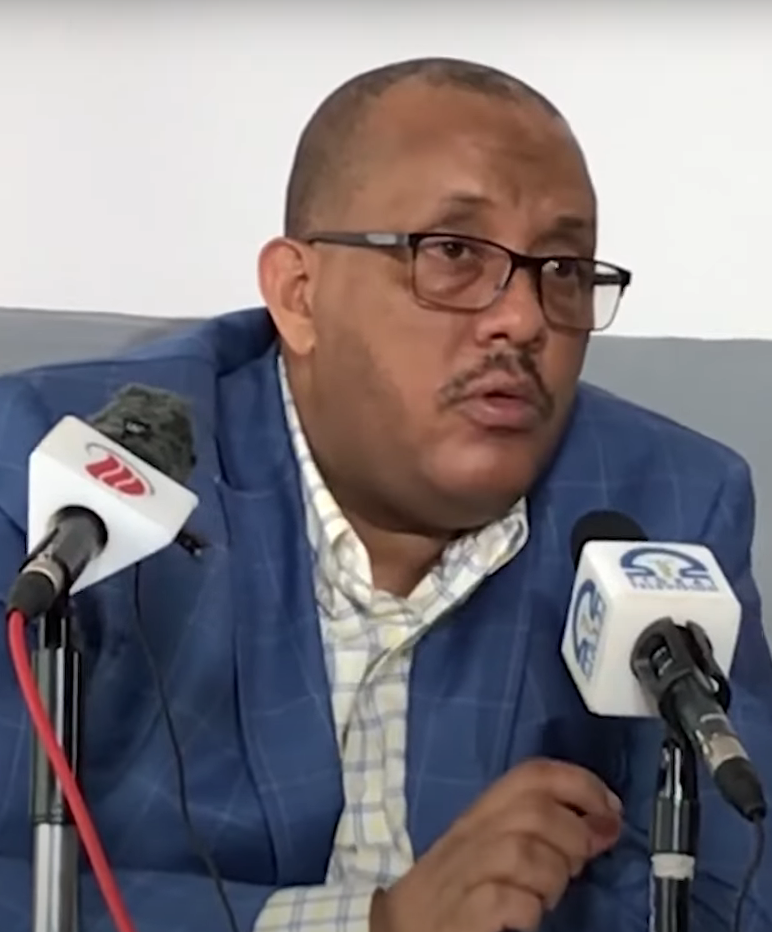
Getachew Reda at a press conference in September 2023, when he was president of the Tigray Interim Administration. File photo. Photo: Voice of America Tigrigna (public domain), via Wikimedia Commons
Getachew Reda said he told the UN’s Horn of Africa envoy on Wednesday that Eritrea and Sudan’s army chief are arming groups and carrying out drone attacks in Ethiopia, though he made no evidence public.
Getachew made the accusation in a post on X after meeting Ambassador Guang Cong, the UN Secretary-General’s Special Envoy for the Horn of Africa. He wrote that their talks covered the war in Sudan and Somalia and “more importantly” what he called “the destructive role the Regime in Asmara is playing in the region,” and that he had “outlined at length Ethiopia’s position vis-à-vis the destabilizing role of the Eritrean regime.” He said he had described “the kinds of activities both President Isaias [Afwerki] and General [Abdel Fattah al-]Burhan have been carrying out to equip, arm and coordinate subversive elements within Ethiopia,” but he did not name the groups, say where or when the drone attacks took place, or say what evidence he had shown the envoy.
He said he had repeated the federal government’s position that both leaders should stop supporting and arming those groups “if indeed any meaningful dialogue is going to take place in order to avoid further escalation of tensions,” and that he and the envoy “both agreed that talking, not shooting is the best game in town.” BBC Afaan Oromoo, which reported the meeting, said Getachew had also asked the UN to help make sure that meaningful talks take place, to keep regional tension from worsening, and that the two countries stop backing armed groups (our translation). The Abay Times also reported the accusation.
Zegabi found no account of the meeting from the UN or from Guang Cong’s office by Wednesday morning, and no response from the governments in Asmara or Khartoum. Both countries have rejected earlier accusations from the authorities in Addis Ababa that they back armed groups fighting the federal government, BBC Afaan Oromoo reported. Eritrea’s Ministry of Information called Getachew a liar “busy agitating for war” last month after he singled out Eritrea at a security forum in Bahir Dar, and Eritrea’s Foreign Ministry said in a statement on Oct. 21 that Eritrean forces were stationed inside the country’s internationally recognized borders. On Monday, Eritrea’s Information Ministry said in a commentary that Eritrea would not negotiate its sovereignty “under any circumstances.”
The accusation against Burhan comes as Khartoum makes its own charges against Addis Ababa. Sudanese officials said on Oct. 28 that drones that hit Sudan’s power stations had been launched from inside Ethiopia, including from Bahir Dar Airport, and early this month Sudan complained to the UN Security Council and the African Union’s Peace and Security Council that Ethiopia had let its territory be used for attacks on Sudan, BBC Afaan Oromoo reported. Ethiopia accuses Sudan of sheltering and arming the Tigray People’s Liberation Front, and Sudan accuses Ethiopia of sheltering the Rapid Support Forces led by Gen. Mohamed Hamdan Dagalo, according to the BBC, and the Ethiopian Government denies backing the RSF, The Abay Times reported. On Nov. 4, Ethiopia ordered six staff of Sudan’s consulate in Assosa to leave the country within 48 hours, and Sudan then closed Ethiopia’s consulate in Gadarif, Reuters reported.
None of these claims has been independently established. Last Friday the Ethiopian Gov’t showed diplomats weapons it said had been captured from the TPLF and claimed that Egypt, Eritrea and Sudan had supplied them, but none of the reports Zegabi reviewed described any independent inspection of the weapons. U.S. Secretary of State Marco Rubio, speaking in October, called drone strikes on Addis Ababa terrorist attacks and spoke of “separatists” attacking inside Ethiopia, without naming any foreign government.
On X, Felemawi (@phelemawi), who describes himself in his bio as “Eritrean with #EBRF, for a free Eritrea,” quoted Getachew’s post and wrote that his group welcomed the attention and that “Isaias Afwerki and the PFDJ have turned every crisis around Eritrea into a tool for their own survival, while our people live with no constitution, no elections and no free press.”
Getachew, who was president of Tigray’s interim administration before he joined the federal government, also met Guang Cong on Oct. 21, when he said in another post that he had briefed the envoy on events in Tigray since Sept. 23 and urged the international community to be mindful of “the destructive role the Regime in Asmara had and continues to have in destabilizing the entire region and Ethiopia in particular.” Guang Cong told the Security Council on Nov. 5 that insecurity and humanitarian conditions were getting worse in Sudan’s South Kordofan and Blue Nile states and called for stronger diplomatic efforts to prevent further escalation, the UN Department of Political and Peacebuilding Affairs said. Blue Nile borders Ethiopia’s Benishangul-Gumuz region, whose capital is Assosa.
Zegabi emailed requests for comment at about 10 a.m. Eastern on Nov. 11 to Ethiopia’s Foreign Ministry, the spokesperson for the UN Secretary-General, the African Union, IGAD, OHCHR, the Ethiopian Human Rights Commission, Amnesty International and Human Rights Watch, and had not received replies by the time of this update.
Sources
- Getachew Reda (@reda_getachew) on X, Nov. 11, 2026: meeting with UN Special Envoy Guang Cong
- Getachew Reda (@reda_getachew) on X, Oct. 21, 2026: earlier meeting with Guang Cong
- BBC Afaan Oromoo, Nov. 11, 2026: Eritrea and Sudan have a hand in drone attacks carried out in Ethiopia, says the PM’s adviser on East African affairs (Afaan Oromoo)
- The Abay Times, Nov. 11, 2026: Getachew accuses Eritrea and Sudan’s army of arming groups in Ethiopia in talks with UN envoy
- Shabait, Oct. 21, 2026: Eritrea’s Principled Position Regarding the Ongoing Situation with Ethiopia
- UN DPPA, This Week in DPPA, Oct. 31 to Nov. 6, 2026: Special Envoy Cong briefs the Security Council
- Felemawi (@phelemawi) on X, Nov. 11, 2026
- Zegabi, Oct. 24, 2026: Eritrea Calls Getachew Reda a Liar “Busy Agitating for War” After His Bahir Dar Forum Remarks
- Zegabi, Oct. 29, 2026: Sudan Says Drones That Hit Its Power Stations Were Launched From Ethiopia, Including Bahir Dar Airport
- Zegabi, Nov. 5, 2026: Ethiopia Orders Six Sudanese Consulate Staff in Assosa to Leave Within 48 Hours, Senior Ethiopian Official Tells Reuters
- Zegabi, Nov. 9, 2026: Ethiopian Gov’t Shows Diplomats Weapons It Says Were Captured From the TPLF
- Zegabi, Oct. 18, 2026: Rubio Says “Separatists” Attacked Inside Ethiopia and Calls Drone Strikes on Its Capital Terrorist Attacks
- Zegabi, Nov. 10, 2026: Eritrea’s Information Ministry Says Asmara Will Not Negotiate Its Sovereignty ‘Under Any Circumstances’