Kenya’s Mudavadi Says Ethiopia Has Promised to Restore Calm in Moyale, as IOM Says Most Families Who Fled Into Kenya Do Not Have Enough to Eat
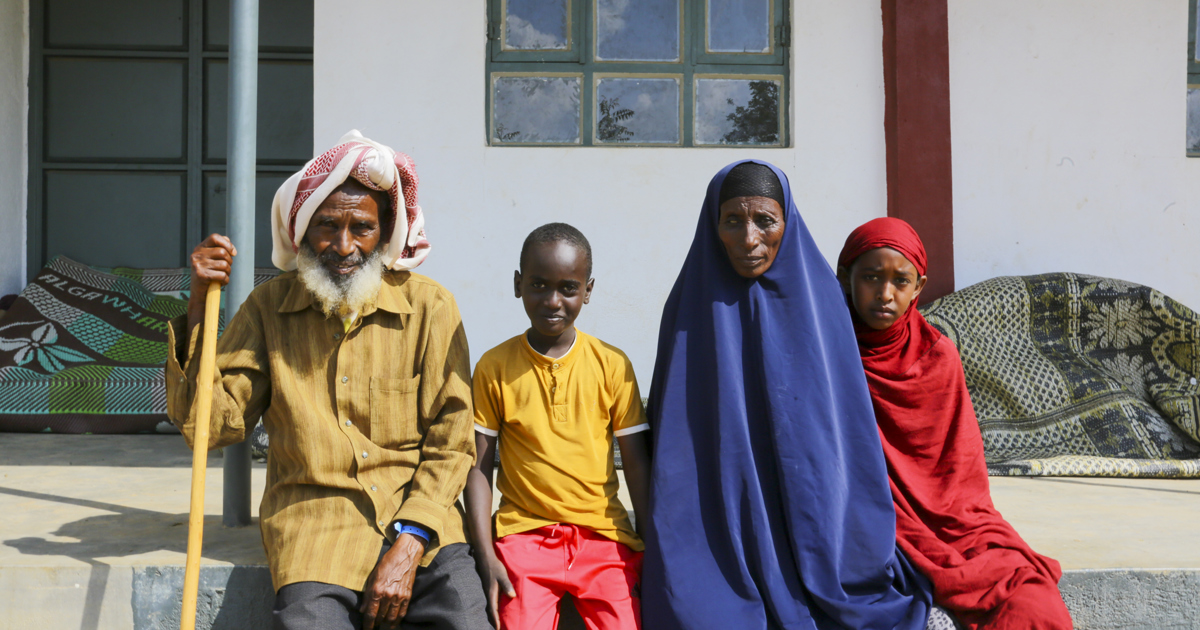
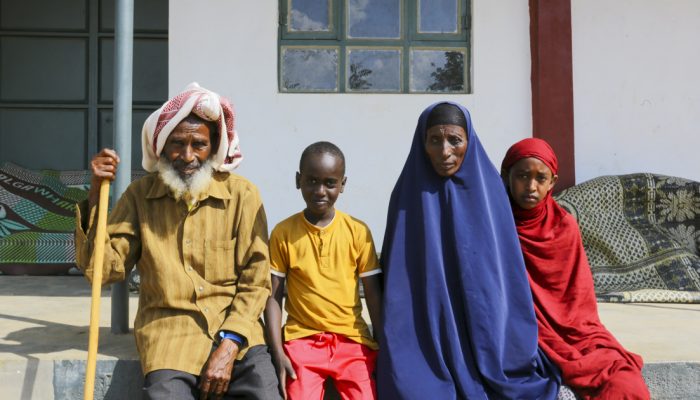
Abdi Roba, his wife and some of his children at the Harhosa temporary protection site in Moyale, Kenya, where they are sheltering after fleeing clashes in Ethiopia. File photo, November 2026. Photo: UNHCR
Kenya’s Prime Cabinet Secretary, Musalia Mudavadi, said on Monday that he had spoken with his Ethiopian counterpart about the roughly 40,000 people from Ethiopia now sheltering in the Kenyan border town of Moyale and that the Ethiopian Government had promised to do its best to restore calm so they can go home, as the International Organization for Migration appealed for money to help families it says are short of food, water and health care.
“The issue is that from the Ethiopian side, they have been having a little bit of tension over there. So, the problem has caused about 40,000 people to evacuate to Kenya,” Mudavadi said, according to The Star. He said he had asked his counterpart to step in and ease the situation so that no more people would be driven out. “I told him to try and calm the situation in their country so that the refugees return to their homes,” he said, adding: “They have assured us that they will do their best to return the issues to normalcy and then the people can go back.” He did not give a timeframe, and The Star did not say which Ethiopian official he spoke to.
BBC Afaan Oromoo, which reported Mudavadi’s remarks, said a BBC reporter who travelled to the places where people from Ethiopian Moyale are sheltering found that more people were still arriving and that aid was not enough. The BBC said the federal government in Addis Ababa had said nothing about the fighting so far and that its own attempts to get a response had failed.
IOM said families who fled are struggling to meet their basic needs, citing a rapid assessment of 758 households carried out by the Kenyan authorities with support from IOM, other UN agencies and aid groups, UN News reported on Monday. The assessment found that 71 percent of the households do not have enough to eat and 80 percent named food as their most urgent need, that 44 percent lack enough drinking water, that more than three quarters have no handwashing facility, and that more than half have trouble getting health care, mainly because of high costs and shortages of medicines. “Families who fled are facing serious shortages of food, water and adequate shelter, while communities hosting them are already facing limited resources,” said Nomagugu Ncube, IOM’s chief of mission in Kenya.
Nearly all of the households surveyed, 96 percent, had fled from Ethiopia, and 91 percent said their entire village had fled, according to the assessment. More than half of the new arrivals are children, many of them under five, which IOM said raised “concerns about their health and wellbeing amid worsening living conditions.” Most are staying with relatives or host families in Moyale, while others are sheltering in schools and temporary sites and some are sleeping in the open.
Mudavadi’s figure of about 40,000 is lower than the roughly 50,000 that UN agencies have used since late October. The assessment report, carried out on Oct. 29 and 30, interviewed 439 households at temporary displacement sites and 319 displaced households living with host families, and it says Kenyan national and county officials agreed on Oct. 24 on an estimate of about 36,000 displaced people, while other sources have put the number at around 50,000 to account for people who arrived after that estimate.
On the Ethiopian side of the border, residents told BBC Afaan Oromoo that gunfire was keeping them from sleeping, and the BBC said an unknown number of people had been killed there. Clashes have broken out in Moyale from time to time for years, but residents told the BBC that this round is wider and worse than before. It began when the Somali region raised its flag in kebele 02 of Moyale town, which drew protests. Galmaa Korophichaa, the mayor of the Oromia side of Moyale, had earlier told the BBC: “Because a 13-year-old Borana girl objected to this, they killed her and even took her body” (our translation from Afaan Oromoo).
Ethio Segenet Media (@HabtamuAyalew21), which describes itself as a US-based Ethiopian news analysis outlet, posted night video early on Tuesday that it said showed “intense fighting” in Ethiopian Moyale “with heavy gunfire, RPGs and high-calibre ammunition.” Zegabi could not verify where or when the video was filmed.
The Star reported that suspected stray bullets and unexploded explosives have landed on the Kenyan side of the border, and that Kenya’s Inspector General of Police, Douglas Kanja, ordered more officers to Moyale on Nov. 5. Britain’s Foreign, Commonwealth and Development Office, which updated its Kenya travel advice on Nov. 6, now advises against all but essential travel to Moyale town and up to 5 kilometres around it, citing “reports of stray gunfire, unexploded ordnance and projectiles landing in and up to 3km around the Kenyan town of Moyale, resulting in fatalities and injuries.” Zegabi found no public comment on Mudavadi’s remarks from Ethiopia’s Ministry of Foreign Affairs or from the Oromia or Somali regional governments by Tuesday morning.
Sources
- The Star, Nov. 9, 2026: Mudavadi in communication with Ethiopia after 40,000 flee to Kenya
- BBC Afaan Oromoo, Nov. 9, 2026: Kenya says it is talking with Ethiopia’s government about people displaced by the Moyale conflict
- UN News, Nov. 9, 2026: Families who fled Ethiopia for Kenya’s Moyale need food, water and shelter
- UK FCDO, Kenya travel advice, Regional risks (updated Nov. 6, 2026)
- UNHCR Operational Data Portal: Moyale Emergency, Government of Kenya’s Rapid Needs Assessment (Nov. 3, 2026)
- Ethio Segenet Media (@HabtamuAyalew21) on X, Nov. 10, 2026