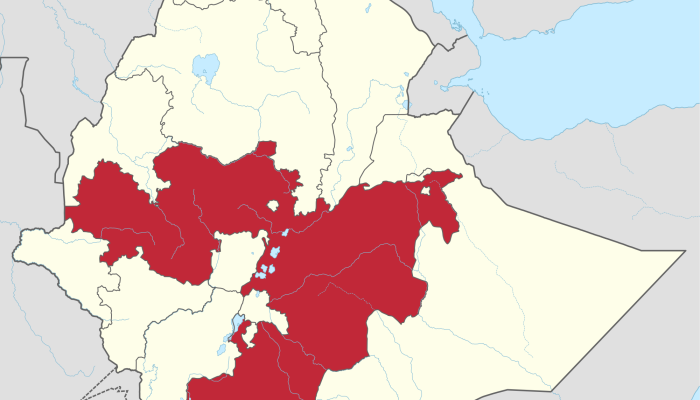
Residents Blame Fano Forces for Killings in Three Wollega Districts, and Oromia’s Communication Chief Claims an Alliance of ‘Amharic- and Oromo-Speaking Shene’ Is Behind Them
Residents of three districts in western Oromia’s Wollega area told BBC Afaan Oromoo that Fano forces have killed civilians, burned homes and looted livestock in raids over the past two weeks, and the head of the Oromia Communication Bureau has confirmed attacks on civilians there while claiming that they are the work of an alliance of what he called Amharic-speaking and Afaan Oromo-speaking “Shene,” a term the government uses for the Oromo Liberation Army.
Hailu Adugna, who heads the bureau, told BBC Afaan Oromoo that attacks aimed at civilians were taking place in Kiremu, Abe Dongoro and Gida Ayana woredas and that they were being carried out by an alliance of what he called “Amharic-speaking Shene and Afaan Oromo-speaking Shene.” The authorities use the word Shene for the OLA, and The Abay Times, which also reported his remarks, noted that the government calls the OLA the Afaan Oromo-speaking Shene. Hailu said the regional government was taking strong action against the attackers, that the force behind the raids had targeted civilians for six years and claimed every place it settled as its own, and that because it could not stand up to government security forces it moved from place to place attacking civilians. He did not give a death toll, and the number of people killed across the three woredas has not been established.
A Kiremu resident told the BBC that Fano fighters surrounded his kebele from three directions on the morning of Oct. 25 and opened fire with a DShK heavy machine gun, that local militia tried to hold them off and one militiaman was killed and another wounded, and that 13 civilians were buried that day. “As a mother ran carrying a five-year-old child, they hit the child and it fell from her to the ground. They hit the mother too, and she lay there through the night until the police and militia who went to bury the dead in the morning found her wounded and carried her away,” he said (our translation from Afaan Oromoo). He said the attackers burned the local health post and school, that no one now remains in the kebele, and that the armed group had set up camp in some kebeles of the woreda.
A resident of Abe Dongoro told the BBC that fighters came this week with heavy weapons, opened fire and burned many houses, including in Charo kebele, and drove off large numbers of livestock, and he said it was hard to know who had been killed because people were hiding in the forest. A resident of Gudina Jireenya kebele in Kiremu said the attackers wanted to push Oromo residents off their land and set up a special zone of their own, while a resident of Tulu Wayu town in Abe Dongoro said their aim was to take land.
Addis Standard, in a news analysis shared on X on Nov. 6, reported killings, homes and places of worship burned and residents fleeing in Abe Dongoro, Kiremu and Gida Ayana, and said the lines between rival armed groups, local militias and forces aligned with the government had become hard to draw, leaving communities caught between competing claims over who controls the land and who is to blame for the attacks. Wazema Radio reported on Nov. 4 that armed men had killed eight members of one family inside their home in Tulu Wayu town the day before, without saying who the attackers were.
Hailu’s claim that the attackers are working with the OLA has not been independently verified. BBC Afaan Oromoo noted that the Oromia government also accuses the OLA of attacking security forces from behind when they move against Fano, and that the OLA has in the past denied attacking civilians. BBC Afaan Oromoo reported that Fano fighters have attacked Kiremu, Haro and Gida Ayana, and Jardega Jarte, Amuru and Abe Dongoro in Horo Guduru Wollega, at different times. Residents and the regional government told the BBC that the attackers have taken looted property to the Amhara region, and residents said fighters who came from Amhara had been joined by people born in the area. Zegabi found no public response from Fano or the OLA to the latest accusations by Monday morning.
The Oromo Liberation Front, a registered opposition party distinct from the OLA, condemned what it called a war of land expansion along Oromia’s borders in a statement on Friday, Nov. 6, and openly named armed men operating under the Fano name, along with the Somali region’s special police, as tied to the seizure of land, according to BBC Afaan Oromoo. The OLF said civilians had been killed and people “counted in the hundreds of thousands” had been driven from their homes and property (our translation from Afaan Oromoo), and the BBC said it had not independently confirmed the casualty figures in the statement or who was behind the attacks it described.
Violence in the same area has also been aimed at Amhara residents. Residents of Tulu Gena in Abe Dongoro told The Abay Times, in a report published Nov. 2, that regional forces passing through on operations against Fano had killed at least 25 civilians there on Oct. 25 and 26, with some putting the toll at about 40, and that the targets were Amhara residents suspected of backing Fano. The Oromia government denies that the unit residents named, known locally as “Gada Commando,” exists.
On X, accounts that document attacks on Amhara civilians said drone strikes had hit displaced Amhara families sheltering in Kiremu woreda late last week. Amhara War Updates (@AmharaWarUpdate), which says it draws on data from the Amhara Association of America, posted on Monday that “regime aerial forces conducted successive nighttime drone strikes” on Nov. 6 on displaced people in the Wodesa-Dima area of Kiremu who had fled Gida Ayana, and that “preliminary reports indicate at least 23 displaced civilians were killed.” The account ነብዩ (@neby_G) put the toll at 29 on Saturday, saying the strikes began at about 4:30 p.m. on Nov. 6, and wrote on Sunday that it had passed 30 as wounded people died without treatment. Massive Stay Home (@Messi45249554) wrote in Amharic on Saturday that 31 displaced people sheltering in the forest were killed in a night drone strike in Burqa Soroma kebele of Kiremu (our translation). The posts differ on the date, time, place and toll, and they blame federal forces. Zegabi could not independently verify any of them and found no comment from the federal government or the military by Monday morning.
Wabii (@maaraanaata), an account that lists its location as Oromia, wrote in Amharic on Saturday that “Fano forces are carrying out killings and displacement of civilians in Kiramu and Abe Dongoro woredas of East Wollega in recent days” (our translation). Ewnetu B. Debela (@ebdebela), who describes himself as a teacher, diplomat, author and former ambassador, wrote on Saturday: “What is happening in Abe Dongoro, Kiremu, and Gida Ayana is heartbreaking and simply unacceptable.”
The Wollega districts are fertile farmland where thousands of people of Amhara origin, settled there under the Derg and in the years that followed, had long lived in peace, BBC Afaan Oromoo reported, and Fano fighters announced a military command in East Wollega in 2024. Zegabi found no public comment from the authorities in Addis Ababa on the latest Wollega attacks or on the drone strike claims by Monday morning.
Sources
- BBC Afaan Oromoo, Nov. 7, 2026: “Amharic- and Afaan Oromo-speaking Shene are allied and killing civilians,” says Hailu
- The Abay Times, Nov. 8, 2026: Oromia official confirms attacks on civilians in three Wollega districts
- BBC Afaan Oromoo, Nov. 7, 2026: OLF condemns what it calls a land invasion along Oromia’s borders
- Addis Standard on X, Nov. 6, 2026: Wollega’s suffering deepens as rival armed factions leave civilians trapped
- Wazema Radio on X, Nov. 4, 2026: Wednesday news summary
- The Abay Times, Nov. 2, 2026: Residents say dozens of civilians killed in attack on Oromia’s Tulu Gena
- ነብዩ (@neby_G) on X, Nov. 7, 2026: Drone strike on displaced Amhara civilians in Kiremu Woreda