Local Authorities and UNHCR Say Up to 50,000 Ethiopians Have Fled Into Kenya as Moyale Fighting Sends Stray Fire Across the Border
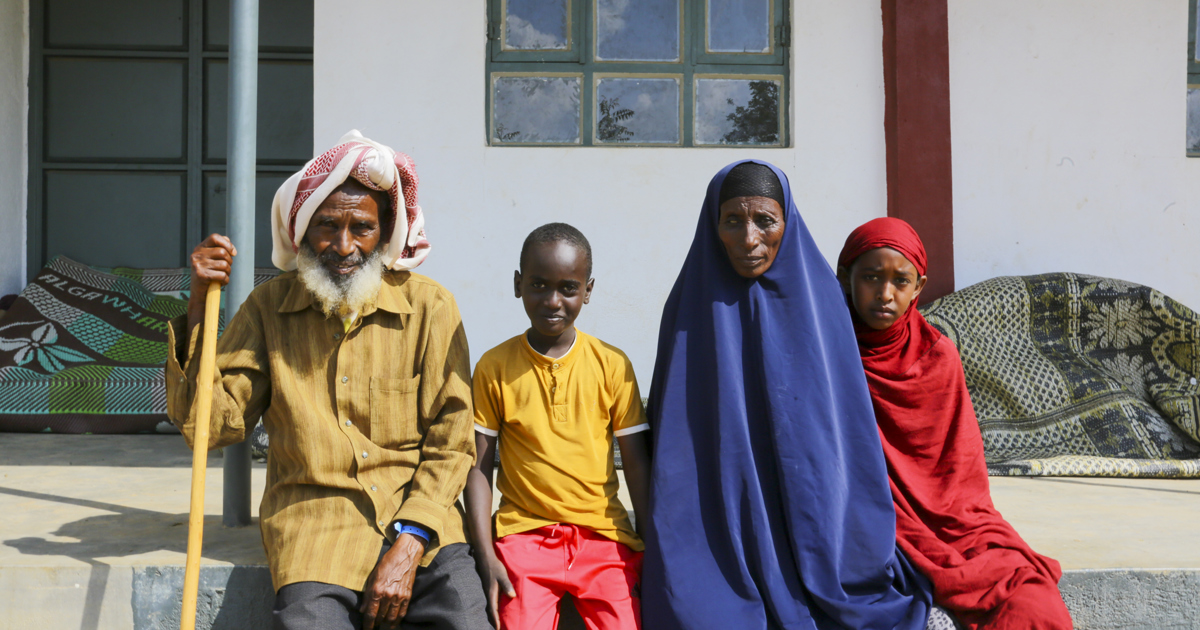
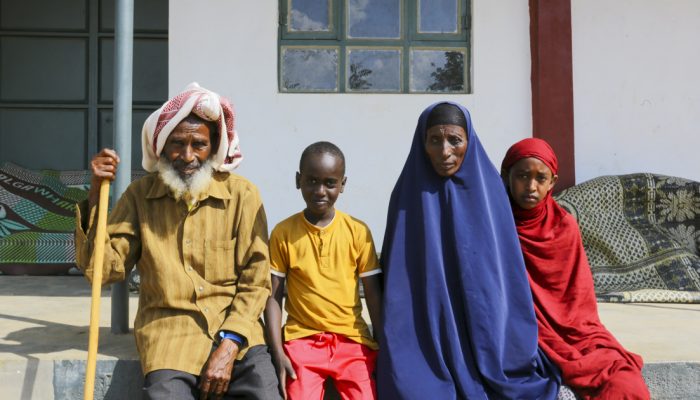
Abdi Roba, his wife and some of his children at the Harhosa temporary protection site in Moyale, Kenya, where they are sheltering after fleeing ongoing clashes in Ethiopia. Photo: UNHCR
Fighting between forces tied to Ethiopia’s Oromia and Somali regions around the border town of Moyale has driven tens of thousands of people into Kenya since late October, United Nations and Kenyan officials say, while stray bullets and rocket-propelled grenades have wounded and killed people on the Kenyan side.
UNHCR, the UN Refugee Agency, said on Nov. 4 that significant cross-border movements have been reported since Oct. 22 and that, according to local authorities, up to an estimated 50,000 people have crossed into Kenya. The agency said the figure remains fluid as registration continues, that many of those fleeing are women and children, and that food is the most urgent need, alongside drinking water, emergency shelter, sanitation and health care. UNHCR said it has deployed an emergency team to Moyale and is working with Kenya’s Department of Refugee Services, county authorities, IOM, UNICEF, WFP, the Kenya Red Cross Society and other partners. Together with UNICEF, IOM and WFP, it is seeking $8.9 million to support up to 50,000 people for three months.
Kenya’s Department of Refugee Services has not finished its own tally. In a Nov. 5 report, the Daily Nation said officials were still relying on a rapid needs assessment figure of about 36,000 arrivals, and that 71 percent of displaced households in that assessment lacked enough food. Acting Commissioner for Refugee Affairs Mercy Mwasaru said during a Wednesday visit to Moyale with UNHCR’s Kenya representative, Fatima Mohammed-Cole, that senior Kenyan security chiefs would visit Moyale on Thursday, calling the spillover “a matter of national security concern.” Mohammed-Cole said Kenyan families displaced by stray ammunition now also need support. Moyale Sub-County Police Commander George Kipkoros told the paper that two people were injured by stray bullets on Wednesday afternoon as fresh fighting broke out across the border, that one Kenyan woman who crossed to sell fruit remained missing, and that the Kenya Defence Forces had recovered and detonated seven rocket-propelled grenades.
The fighting began as a dispute over administrative boundaries and grazing land between Oromo and Somali communities in southern Ethiopia, DW Swahili reported. It has been fought with heavy weapons, DW’s Amharic service said. On Nov. 3, Adan Wako Galgalo, who heads the Kenya Red Cross region covering Marsabit, Isiolo and Samburu, told DW Amharic that about 50,000 people had been registered on the Kenyan side, that most had joined host communities by clan rather than camps, and that fewer than 20,000 were in purpose-built shelters. He said most arrivals were women and children, that aid was being pushed out but was not enough, and that stray fire from the Ethiopian side had killed 11 people in Kenya and wounded many more. The International Organization for Migration has warned that arrivals could rise to at least 80,000 if the fighting continues, DW reported. DW also said Ethiopian authorities had not publicly explained the spillover.
On the Kenyan side of Moyale, the human cost has been personal as well as counted. The Star and the Daily Nation reported that Amina Guchi, also spelled Guche, a woman in her mid-60s, was hit in the head by a suspected stray bullet on Nov. 2 while near Marsabit County offices in Moyale and was pronounced dead at Moyale Sub-County Referral Hospital. Marsabit County Commissioner Stanley Kamande told the Star that stray bullets had injured more than eight people and killed Guchi, and that two schools had been moved for safety during national examinations. Deputy County Commissioner Benedict Munywoki told the Nation nine people, including two Ethiopians, had reported injuries from stray bullets and that security forces had found up to 10 unexploded rocket-propelled grenades. Addis Standard’s Amharic desk, citing Kenyan media, reported that three Kenyans had died and about 20 had been wounded in connection with the fighting. Zegabi has not independently confirmed those casualty totals.
On X, people close to the border described nights of gunfire and a fight that shows little sign of ending. ManLike Khalitoh (@Khaleed_018), who lists his location as Moyale, Kenya, posted a video early on Nov. 5 and wrote in Swahili, “Last night sisi watu wa moyale Kenya atukupata usingizi. Weeh hii war nikama haitaisha anytime soon na Risasi inatoka iyo side inamaliza watu side ya Kenya,” which roughly means people in Moyale, Kenya, got no sleep the night before, that the war does not look as if it will end soon, and that bullets coming from the other side are finishing people on the Kenyan side. Ghideon Musa (@GhideonMusaAron), a photographer, wrote that Kenya had deployed the Kenya Defence Forces and other units to Moyale and surrounding areas in Marsabit “in response to escalating inter-communal violence on the Ethiopian side of the border,” and that clashes linked to the Oromia and Somali regional states had driven an estimated 35,000 to 50,000 Ethiopians into Kenya. The Arabic platform Elmanshar (@El_manshar) posted on Nov. 5 about “نزوح جماعي بعد مواجهات بين القوات الصومالية والأورومية في إثيوبيا,” describing renewed heavy fighting between Somali regional forces and Oromia-linked forces around Moyale and “استخدام الأسلحة الثقيلة,” the use of heavy weapons. Those posts are circulating claims and commentary, not independently confirmed by Zegabi.
The federal government in Addis Ababa has not issued a detailed public account of the Moyale fighting or of the casualties reported on either side of the border, according to the Kenyan and international reporting reviewed for this draft. Kenyan officials say they are talking with Ethiopian counterparts. UNHCR says it is looking for safer accommodation farther from the border for people who have fled the violence.
Sources
- UNHCR / USA for UNHCR, Nov. 4, 2026: UNHCR Warns of Growing Humanitarian Needs as Thousands Flee Ethiopia to Kenya
- Daily Nation, Nov. 5, 2026: Ethiopia conflict shifts focus on Kenya’s security
- Daily Nation, Nov. 3, 2026: Tension high in Moyale as stray bullet from Ethiopia kills Kenyan
- The Star, Nov. 4, 2026: Displaced Ethiopians receive Humanitarian assistance in Marsabit
- DW Amharic, Nov. 3, 2026: በሰሜናዊ ኬንያ የጸጥታ ስጋት የደቀነው የሞያሌው ግጭት (p.dw.com/p/5P1FH)
- DW Swahili, Oct. 23, 2026: Maelfu wakimbilia Kenya kufuatia mapigano Ethiopia
- Addis Standard Amharic via X, Nov. 4, 2026
- @Khaleed_018, Nov. 5, 2026
- @GhideonMusaAron, Nov. 4, 2026
- @El_manshar, Nov. 5, 2026