Amnesty Calls for a War Crimes Inquiry Into Army and Tigray Peace Force Shelling of Alamata, Saying It Verified 14 Civilian Deaths
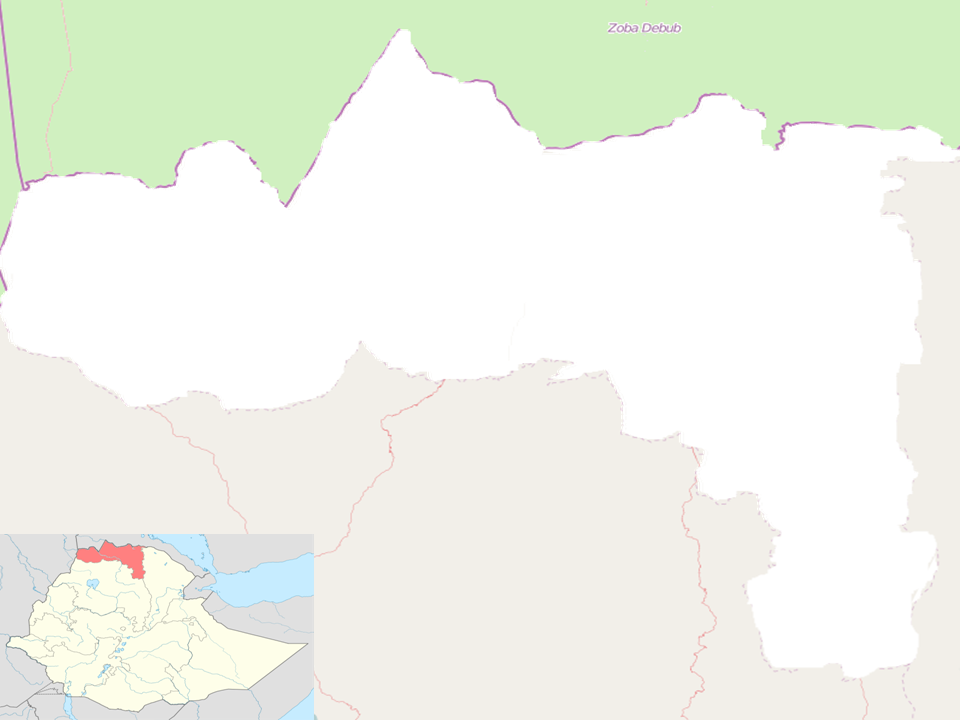
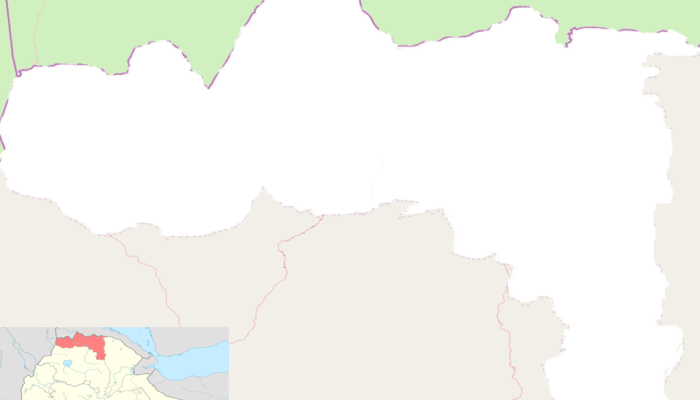
Tigray, in northern Ethiopia. Alamata, not marked, lies at the region’s southern edge, near the boundary with Amhara. Map: Dr. Blofeld/Wikimedia Commons, from OpenStreetMap, CC BY-SA 2.0.
Amnesty International said Monday that shelling of Alamata by Ethiopia’s army and the allied Tigray Peace Force in September killed civilians in their homes and must be investigated as possible war crimes.
The rights group said it had independently verified the deaths of 14 civilians in four shelling incidents between Sept. 26 and 28. Federal troops and the Tigray Peace Force, an armed group that fights alongside them, took the town from the TPLF on Sept. 28, Amnesty said.
“For three consecutive days, the ENDF and TPF repeatedly shelled Alamata in total disregard of the lives of its 80,000 inhabitants,” Yasmine Ahmed, Amnesty’s senior director for regional human rights impact, said in a statement.
Amnesty’s researchers interviewed 28 people, among them survivors, relatives of the dead, witnesses, humanitarian staff and medical workers. Its Evidence Lab examined eight videos, 17 photographs and satellite images of the town. Amnesty said some names were changed or withheld to protect people who asked not to be identified.
Residents and two sources with direct knowledge of the offensive told Amnesty that most of the shells were fired from the Waja Ena Tumuga area, about 13 kilometers south of Alamata. One eyewitness said he saw army artillery being moved into Waja.
The deadliest strike Amnesty documented hit five houses in the condominium area of Kebele 04 at dawn on Sept. 27. Three eyewitnesses said seven people were killed and four were injured.
Meron Sewasew, a 26-year-old mother of two, died in her home with her eight-year-old son, Markon Girmahiwot, and her older brother, Tewekel Sewasew, 33. Her two-year-old son was in the house and survived with minor injuries.
Her husband, Girmahiwot Negash, was away for work. “They were staying in the house because it was supposed to be safe from the war. She was my high school love, and our story ended too soon,” he told Amnesty.
The same strike killed four members of the family next door, Amnesty said. Among them were Kumhis Kahsay, 40, and her 14-year-old child, Helina Hailay, and Lezeu Yirga, 38, and her three-year-old child.
“Kumhis came from church that morning. All of the victims were outside the house doing chores,” a relative who survived told Amnesty. Kumhis was baking injera in the compound when the shell came down, the relative said.
A day earlier, at about 11 a.m., a shell hit a bar called Nigus Shimoy at the entrance to a busy market. People had come out in large numbers for Demera, the eve of the Meskel holiday. At least three people were killed, according to a survivor and a witness.
On Sept. 27, shelling also hit a family home in Kebele 02. Deyima Rebso, 55, was killed, and her husband, Ararse Yasin, 62, was badly hurt. Two of their children and a 10-year-old grandson were seriously injured.
A witness told Amnesty that no military activity had been seen near that house. Amnesty’s weapons investigator said fragments found there were consistent with an artillery round of the type fired by the army and its allies.
On the evening of Sept. 26, a shell struck a house in the Missionary Camp neighborhood, near a school the TPLF had used as a base. Three civilians were killed and four were injured. One witness said most fighters had left the school a week before the fighting broke out, while another saw a few fighters guarding it in the days before the strike.
Amnesty also faulted the TPLF. Six people told Amnesty that almost all of Alamata’s schools were used as bases by TPLF fighters in the months before the war resumed. Residents said the TPLF gave no warnings or orders to leave.
The homes hit on Sept. 27 were about 150 meters from the Werknesh Hotel, which residents said had housed TPLF fighters. Another witness said no fighters were near the hotel that day, and Amnesty said it could not verify either account.
Amnesty said it was “highly unlikely” that the shelling of the town came from TPLF guns inside it. Placing fighters among civilians, Yasmine Ahmed said, “does not absolve the ENDF and its allies of their obligations.”
At the time, a hospital source and residents told the BBC that more than 50 people were killed by shelling during four days of fighting in the town, BBC Amharic recalled on Tuesday. A medical worker told Amnesty that almost all of the casualties were civilians.
Amnesty said it wrote to the army, the Tigray Peace Force and the TPLF on Oct. 27, and shared its findings with the army and the Tigray Peace Force on Nov. 17. The army and the Tigray Peace Force had not responded when the report came out.
A Tigray Peace Force spokesperson told Reuters that the group’s fighters were not on the front lines during the battle.
The TPLF answered in a four-page letter on Nov. 18. “We categorically reject these allegations as unfounded,” it wrote, and said more “independent, impartial, and comprehensive investigation” was needed before anyone was blamed.
The same letter said Amnesty’s preliminary findings “acknowledge certain atrocities committed by the Ethiopian Federal Government and its forces.”
The federal government in Addis Ababa had not commented by Tuesday, BBC Tigrinya reported, and the BBC said it had asked the army for a response. Zegabi found no statement on the official accounts of the prime minister’s office, the foreign ministry or the government communication service.
Alamata sits in southern Tigray, and the Amhara region claims it, BBC Amharic noted. Amnesty says the war between the federal government and the TPLF broke out on Sept. 21, and that the TPLF’s allies include Amhara Fano forces and six other political and armed groups.
Amnesty wants the UN Human Rights Council to set up an independent body to investigate crimes in Ethiopia. The last one, a commission of UN experts, closed in October 2023 after its mandate was not renewed, the UN human rights office said.
That commission had found evidence of war crimes and crimes against humanity in the 2020 to 2022 war. Amnesty also asked the authorities in Addis Ababa to let monitors, journalists and aid groups reach all conflict areas.
In Mekelle, doctors are still treating the wounded. Injured civilians from rural southern and central Tigray reach Ayder Hospital in Mekelle almost daily, many hurt by drones and explosives, a surgeon told RFI, according to Ethiopia Observer.
“We have treated patients with amputations and eye injuries, as well as facial injuries, particularly fractures,” said the surgeon, Abraha Gebregziabher. He said he was told that some people coming from areas with explosive devices died on the way to the hospital.
Sources
- Amnesty International, Nov. 23, 2026: Ethiopia: Lethal artillery strikes on civilian neighbourhoods in Tigray’s Alamata city must be investigated as war crimes
- Amnesty International USA, Nov. 24, 2026: same statement
- Amnesty International East and Southern Africa on X, Nov. 24, 2026
- BBC Amharic, Nov. 24, 2026: Amnesty asks that the heavy weapons shelling in Alamata be investigated as a war crime (Amharic)
- BBC Tigrinya, Nov. 24, 2026: Amnesty calls for the heavy weapons shelling in Alamata to be investigated as a war crime (Tigrinya)
- BBC Afaan Oromoo, Nov. 24, 2026: Amnesty asks that the Alamata attack that took many lives be investigated (Afaan Oromoo)
- Reuters, Nov. 24, 2026: Ethiopian shelling of Tigray town should be investigated as possible war crimes, Amnesty says
- Reuters via CNBC Africa, Nov. 24, 2026: Ethiopian shelling of Tigray town should be investigated as possible war crimes, Amnesty says
- Addis Standard on X, Nov. 24, 2026
- OHCHR, Oct. 26, 2023: UN experts call for ongoing international scrutiny and support for victims in Ethiopia
- Ethiopia Observer, Nov. 23, 2026: Mekele hospital treats civilians wounded in Tigray conflict (RFI report)
- Zegabi’s earlier reporting: 179394, 179428