Residents and a Health Worker Tell BBC That an Attack on Oromia’s Border With the Somali Region Killed 10 People in Mi’eso District
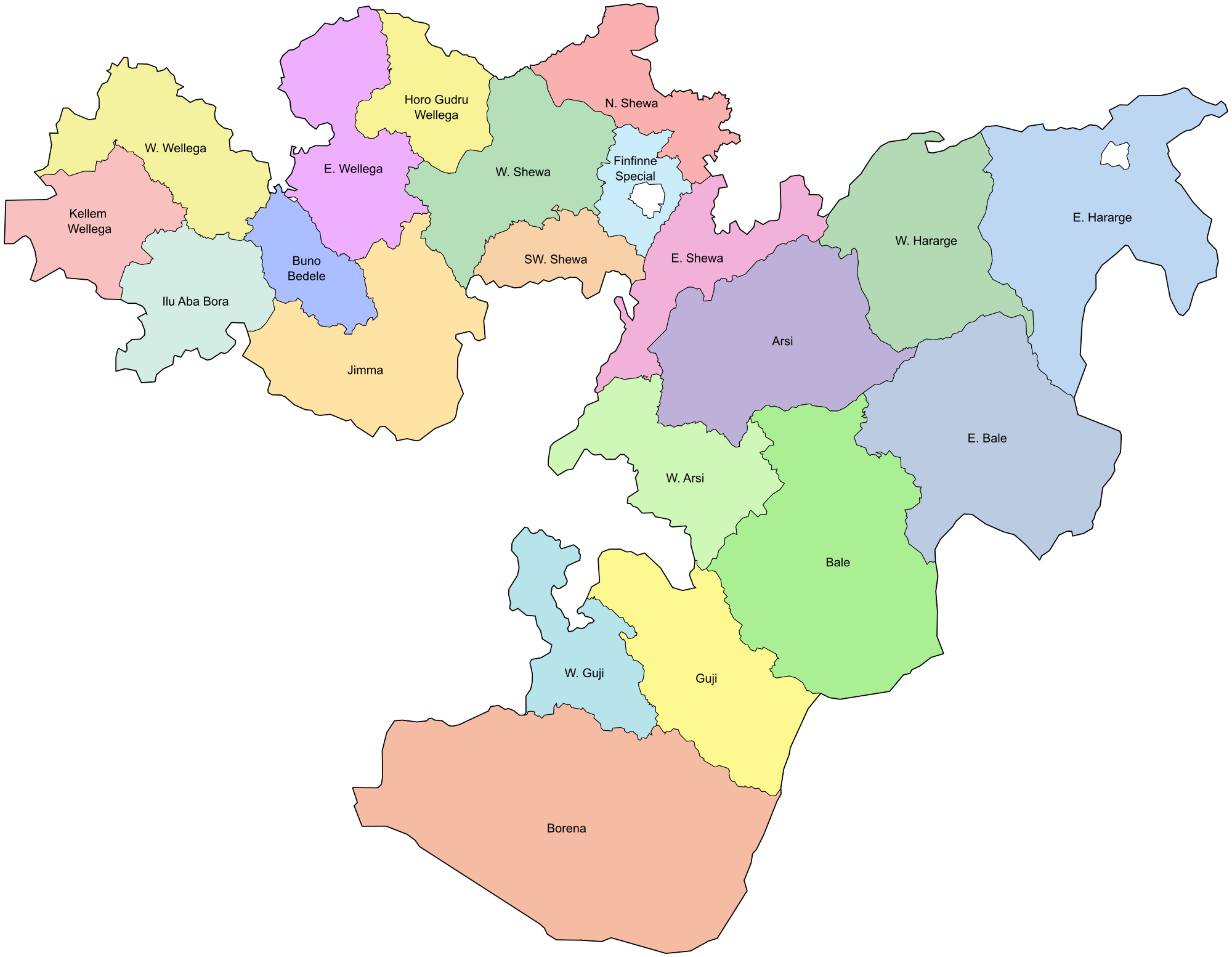
Mi’eso district lies in eastern Oromia, on the region’s border with the Somali region. Map of Oromia’s zones as of December 2021: Ue3lman/Wikimedia Commons, CC BY 4.0
Residents and a health post head told BBC Afaan Oromoo that an attack on Monday killed 10 people and wounded 12 in Mi’eso district, on Oromia’s eastern border with the Somali region.
The BBC said it could not independently verify their accounts.
Residents told BBC Afaan Oromoo that security forces who came from the Somali region crossed into Oromia on Nov. 9 and attacked people with heavy weapons in the kebeles of Qiqiliftuu, Dirree Bal’oo and Waltaanee. Dabbabaa Masfin, who heads the Waltaanee health post, confirmed to the BBC that 22 people with gunshot wounds were brought to his facility that day. “On that day, 22 people who had been hit by bullets were brought to the health post. Of them, 10 died before they reached it,” he said (our translation from Afaan Oromoo, as are the other quotes in this story). Dabbabaa said his staff gave first aid to the 12 wounded and referred them on, many of them to Adama Hospital, and that no new gunshot cases had come in since that day.
A resident of Mi’eso who asked not to be named told the BBC that the fighting is tied to a dispute over land along the border. “This conflict has taken many lives, again and again, for a long time. Recently, without anyone expecting it, forces wearing Somali police uniforms opened fire with heavy weapons in the kebeles near the border, such as Qiqilliftuu and Dirree Bal’oo,” he said. He said many homes were burned, that many people who fled Qiqiliftuu and Dirree Bal’oo had still not gone back, and that people on the Somali side claim those kebeles as their own and have given them other names. By the time Oromia’s security forces reached the area toward evening, he said, the attackers “had done what they did and gone back.”
Another resident told the BBC that elders had stepped in before and got people on both sides to agree that the trouble would not start again. “After we agreed like that, we lived as neighbors among each other, traded together and lived together. Recently they broke that agreement of the people, and the Somali forces caused harm,” he said. Residents said elders, women and young people were among the dead and wounded, and that the area has been calm since Oromia’s security forces moved in on the day of the attack.
The BBC said it tried to get comment on the attack from the Mi’eso district administrator and from officials of the Somali regional government but had not reached them by the time it published, and no government body had said who carried out the attack, why, or how it happened.
On X, the Oromo Legacy Leadership and Advocacy Association (@ollaaOromo) wrote on Nov. 12 that it was receiving reports from local sources of at least 10 civilians killed and 12 injured in an attack it said was carried out by Somali regional police in Miesso district on Nov. 9. On the night of the attack, the scholar Tsegaye Ararssa (@RArarssa) shared an inbox message that listed named dead and wounded in Waltaanee, Dirree Balloo and Qiqiliftuu and blamed Somali regional special police; those names and figures have not been independently verified. Zegabi found no comment on the attack from officials of the Somali or Oromia regional governments.
The BBC noted that deadly clashes along the long border between Oromia and the Somali region have recurred for years in districts such as Mi’eso and Chinaksen, and that residents have asked both regional governments to find a lasting solution. Farther south, fighting in Moyale recently drove families across the border into Kenya, and Kenya’s Prime Cabinet Secretary, Musalia Mudavadi, said this week that Ethiopia had promised to restore calm there, as Zegabi reported.
Sources
- BBC Afaan Oromoo, Nov. 13, 2026: New attack on the Oromia–Somali border claims 10 lives in Mi’eso district (Afaan Oromoo)
- Oromo Legacy Leadership and Advocacy Association (@ollaaOromo) on X, Nov. 12, 2026
- Tsegaye Ararssa (@RArarssa) on X, Nov. 9, 2026
- Zegabi, Nov. 10, 2026: Kenya’s Mudavadi Says Ethiopia Has Promised to Restore Calm in Moyale, as IOM Says Most Families Who Fled Into Kenya Do Not Have Enough to Eat