Witnesses Tell BBC a Drone Strike Killed 36 Displaced People, Among Them Eight Children, as They Fled on Foot Through Western Oromia’s Kiremu District
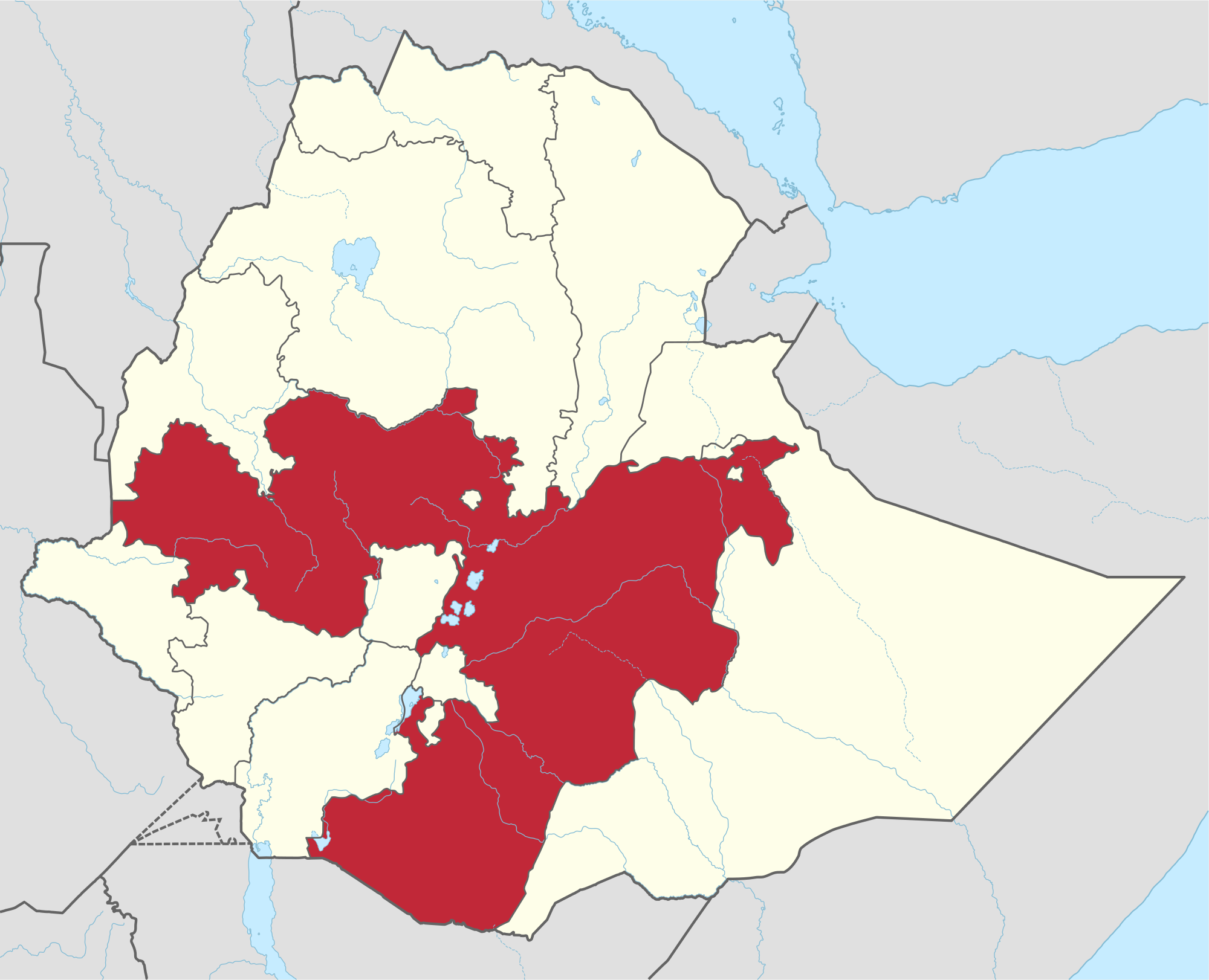
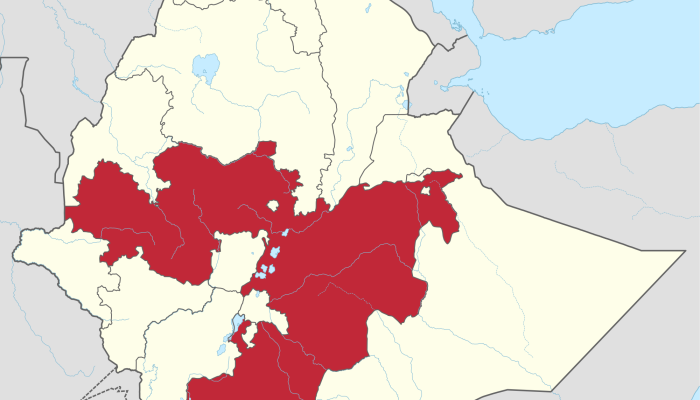
Kiremu woreda lies in the Wollega area of western Oromia, shown on this locator map of Ethiopia. Map: TUBS/Wikimedia Commons, CC BY-SA 3.0
A drone strike late last Friday killed at least 36 displaced people walking through western Oromia’s Kiremu woreda, five witnesses told BBC Amharic, which said it could not independently verify their account.
The witnesses told BBC Amharic and BBC Tigrinya that the dead were part of a group of about 200 to 300 people, many of them children and old people, who had left their homes in neighboring Gida Ayana woreda because of the insecurity there since August and were crossing the countryside on foot, hoping to reach Gojjam in the Amhara region. They said the drone hit them at a place called Wedesa Dima at about 10 p.m. on Nov. 6, and one of them, who asked not to be named for his safety, said it struck twice. Kiremu was part of East Wollega zone and now falls under West Oromia zone in the region’s new administrative map, the BBC said.
“We were walking at night by the light of our flashlights when we saw a drone hovering over us,” one resident told the BBC, and he said it suddenly fired while people were still telling one another, “Please turn off the flashlights” (our translation from Amharic, as are the other quotes in this story).
Another witness said the dead included eight children, 17 mothers, five of them pregnant, three blind monks and three men older than 60, and that some of the bodies could not be identified. “The damage is heavy. We are at a time when it is hateful to be human,” he said. He told the BBC the group had been driven from their homes by the “Gadaa Commando,” the name residents give to a force they say belongs to the regional government. The Oromia regional government denies that any such force exists, and Gen. Hailu Gonfa, the regional president’s adviser on peace and security, recently told the BBC, “We have no organization called Gadaa Commando.”
A resident who said he lost eight relatives, among them his brother, his brother’s wife and two of their children, said he took four wounded members of his brother’s family for treatment the morning after the strike, and that he had seen 16 wounded people who were not getting proper medical care. “All of those killed were innocent people walking home on foot after fleeing the Gadaa Commando’s attacks,” he said. Another witness said the dead were buried in the forest the next morning. “We dug in the forest and buried them just like that. They had been left lying there like wild animals,” he said, adding that two babies who had been carried on their mothers’ backs survived. A third resident said 36 people, eight of them children younger than five, were buried together at Wedesa Dima, and that nobody dared carry them to the church “because we were afraid that if we gathered, we could be hit.” He said a drone was still circling over the area the night before he spoke to the BBC.
The BBC said spokespeople for the Ethiopian National Defense Force and for the Oromia regional government’s communication office did not answer its phone calls or written questions about the strike, and neither the witnesses nor the BBC said whose drone it was. In past official statements on drone strikes, the Ethiopian federal government has said its operations target only armed groups and that it takes the greatest care not to harm civilians, BBC Tigrinya noted. The Ethiopian Human Rights Commission and international human rights groups have repeatedly reported civilians killed in air and drone strikes in different parts of the country, the BBC added.
Kiremu, Abe Dongoro and Gida Ayana have for years been caught between the Oromo Liberation Army, Fano forces, local militias and forces linked to the government. Earlier this week, residents of the three woredas told BBC Afaan Oromoo that Fano forces had killed civilians, burned homes and looted livestock in raids over the past two weeks, and Hailu Adugna, head of the Oromia Communication Bureau, blamed what he called an alliance of “Amharic-speaking Shene and Afaan Oromo-speaking Shene,” using the government’s name for the OLA. Earlier this month, residents told the BBC that regional forces had killed up to 40 civilians in Tulu Gena.
On X, several accounts posted videos they said showed wounded survivors of the strike, gave the date as Nov. 7 and blamed the federal government. One of them, @amharafan, put the number of dead at 29 on Wednesday. Zegabi could not verify the videos, the date or the toll in those posts.
Sources
- BBC Amharic, Nov. 12, 2026: Witnesses say many were killed in a drone strike in Kiremu woreda, Oromia region (Amharic)
- BBC Tigrinya, Nov. 12, 2026: Displaced people of western Oromia killed by a drone while fleeing an attack (Tigrinya)
- @amharafan on X, Nov. 11, 2026
- Zegabi, Nov. 9, 2026: Residents Blame Fano Forces for Killings in Three Wollega Districts
- Zegabi, Nov. 2, 2026: Residents Tell BBC That Oromia Regional Forces Killed Up to 40 Civilians in Wollega’s Tulu Gena